Manifestation
Affirmations and Subconscious Reprogramming: How Repetitive Positive Statements Rewire Neural Pathways and Dissolve the Hidden Beliefs Blocking Manifestation
Quantress · May 4, 2026
Affirmations are far more than motivational phrases — when delivered at the right frequency and emotional intensity, they structurally alter the brain's default belief architecture. This article unpacks the neuroscience of self-affirmation, why most people use them incorrectly, and the precise protocol that makes them work.
There is a peculiar gap between what we consciously want and what we consistently experience. Most people have felt it — the frustrating distance between a clearly held intention and the reality that keeps showing up instead. Modern neuroscience is beginning to explain why this gap exists, and more importantly, how a deceptively simple practice called affirmations and subconscious reprogramming may be one of the most scientifically grounded tools for closing it. The answer lies not in willpower or positive thinking alone, but in the hidden architecture of the brain itself — and in how repetition, emotion, and frequency can literally rewrite the operating system running beneath conscious awareness.
The Subconscious as Software: What Neuroscience Reveals About Hidden Beliefs
The subconscious mind processes an estimated 11 million bits of information per second, compared to the mere 40 bits handled by conscious awareness. This staggering asymmetry means that the vast majority of your decisions, emotional reactions, and behavioral patterns are being driven by programming you didn't consciously choose — beliefs absorbed before the age of seven, during a period when the brain operates predominantly in theta brainwave states, making it essentially hypnotic and highly impressionable.
Dr. Bruce Lipton, a cellular biologist and researcher at Stanford University, has written extensively about how subconscious programs control approximately 95% of human behavior. In his framework, the subconscious functions like a habitual recording that runs automatically, and conscious affirmations alone — spoken without emotional engagement or repetitive reinforcement — rarely penetrate its surface. This is why someone can repeat "I am wealthy" a hundred times while simultaneously feeling the quiet internal whisper of "no, you're not" running underneath.
"The subconscious mind is not a bad master. It is a faithful servant — faithfully reproducing whatever has been programmed into it, whether those programs serve us or limit us."
— Dr. Bruce Lipton, The Biology of Belief
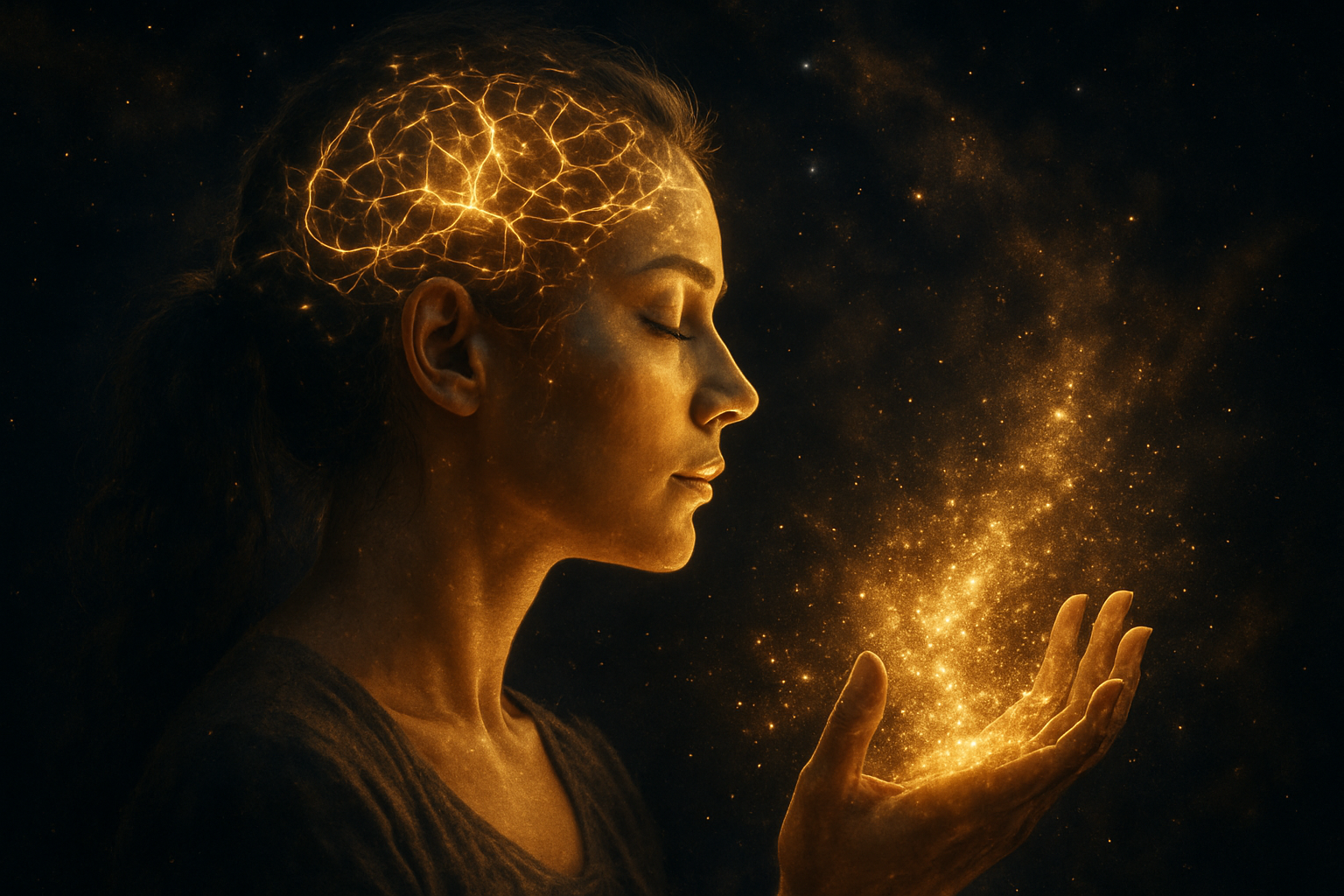
The scientific understanding of neuroplasticity — the brain's capacity to reorganize itself by forming new neural connections — gives us a biological foundation for why affirmations and subconscious reprogramming can work when applied correctly. Every thought you think repeatedly strengthens a specific neural pathway. Neurons that fire together wire together, as neuroscientist Donald Hebb famously observed. The practice of affirmations, at its most mechanistically elegant, is simply the deliberate act of choosing which pathways to strengthen.
Why Most Affirmations Fail — And the Key Ingredients That Make Them Work
The failure of conventional affirmations isn't evidence that the practice is ineffective. It's evidence that the practice is often incomplete. Research in cognitive neuroscience points to several critical factors that determine whether a repeated statement rewires the brain or simply bounces off it.
The first factor is emotional resonance. A 2010 study published in Psychological Science by researchers Joanne Wood, Elaine Perunovic, and John Lee found that low self-esteem individuals who repeated simple positive self-statements actually felt worse afterward. The disconnect between the affirmation and their deeply held beliefs created cognitive dissonance — a signal of internal conflict. The solution is not to abandon affirmations, but to craft them in ways that meet the nervous system where it is. Rather than stating "I am rich," a more neurologically congruent bridge affirmation might be: "I am open to discovering how abundance flows into my life." This reduces resistance while still directing the mind toward expansion.
The second factor is brainwave state. The subconscious is most receptive during hypnagogic states — those drowsy thresholds between waking and sleep — when the brain naturally drops into alpha and theta frequencies. Practicing affirmations in these windows, or inducing these states deliberately through meditation, breath work, or binaural beats, dramatically increases their penetration depth. Studies on hypnotherapy, which operates on precisely this principle, show measurable behavioral and physiological changes from suggestion delivered in theta states.
The third factor is repetition across time. Neuroscientific research on long-term potentiation — the cellular mechanism underlying memory formation — shows that repeated activation of a neural circuit strengthens the synaptic connections between neurons. There is no shortcut here: consistent, daily practice over weeks and months is what produces lasting structural change in the brain.
- Morning threshold practice: Before fully waking, when you're still in a hypnagogic state, silently repeat your chosen affirmations three to five times with slow, conscious breathing.
- Evening integration: In the final minutes before sleep, replay the emotional feeling of your affirmation as if it were already true. The brain consolidates memory during sleep — give it something worth consolidating.
- Written embodiment: Handwriting affirmations activates kinesthetic neural pathways distinct from those engaged in silent repetition, reinforcing the reprogramming through multiple sensory channels simultaneously.
- Mirror work: Speaking affirmations directly to your own reflected gaze activates limbic system responses and deepens the emotional authenticity of the practice, a method extensively studied and popularized by researcher and author Louise Hay.
The Quantum Dimension: Consciousness, Frequency, and Field Coherence
Here is where the science becomes genuinely strange — and fascinating. Quantum field theory, as applied to consciousness research, suggests that the mind does not merely passively observe reality but participates in its construction. The observer effect in quantum mechanics — documented in double-slit experiments where the act of measurement collapses a particle's wave function — hints at a deeper entanglement between consciousness and the physical world than classical physics ever entertained.
Researchers at the HeartMath Institute have demonstrated that coherent emotional states — generated through practices like heart-focused breathing and positive emotional cultivation — produce measurable changes in the body's electromagnetic field, extending up to several feet beyond the physical body. This field, they propose, interacts with the broader quantum field in ways that may influence probabilistic outcomes in ways we are only beginning to understand.
When you practice affirmations and subconscious reprogramming with genuine emotional coherence, you are not simply conditioning your brain — you are broadcasting a specific vibrational signature into the quantum field. This is where the ancient mystic's language of "speaking things into existence" and the contemporary physicist's language of "collapsing probability waves" begin to converge in unexpectedly literal ways.
Sound itself carries this principle into even more tangible territory. Specific frequencies — particularly those in the 432 Hz and 528 Hz ranges — have been associated in emerging research with cellular coherence and DNA repair. When affirmations are spoken or listened to against a background of these healing frequencies, the vibrational coupling between sound wave and intention may amplify the reprogramming effect beyond what silent repetition alone achieves. Quantress users report noticeably deeper states of receptivity and emotional resonance when combining affirmations with frequency-layered audio environments, suggesting that the integration of harmonic sound with intentional language creates a synergistic effect on both neural and energetic levels.
Designing a Personal Reprogramming Protocol: Practical Architecture for Lasting Change
Sustainable subconscious reprogramming requires treating the process like a protocol rather than a sporadic practice. The brain rewards consistency with structure: when new neural pathways are activated repeatedly within predictable contexts, they consolidate more efficiently.
Begin by identifying one core limiting belief — not dozens — that you sense is most actively blocking manifestation in your life. Common examples include "I am not enough," "money is scarce," "love is dangerous," or "I don't deserve success." Bring curiosity rather than judgment to this inquiry. Once identified, craft a bridge affirmation that acknowledges where you are while orienting toward where you choose to go. Pair it with a specific somatic anchor: a hand on the heart, a particular breath pattern, or a grounding physical gesture that trains the body to enter receptive states on cue.
Practice this protocol daily for a minimum of 21 days — the neurological window most frequently cited for initial habit formation — with the understanding that deeper subconscious restructuring typically requires 60 to 90 days of sustained practice. Track subtle shifts in your emotional baseline, your spontaneous inner dialogue, and the external synchronicities that begin to appear. These are the early signatures of a field that is genuinely beginning to reorganize around a new internal signal.
The Invitation: Become the Scientist of Your Own Consciousness
The most exciting frontier in consciousness research is not found in a laboratory alone. It is found in the intersection between rigorous scientific inquiry and direct, embodied experimentation with your own awareness. Affirmations and subconscious reprogramming represent a practice that is simultaneously ancient and cutting-edge — validated by neuroscience, enriched by quantum physics, and deepened by centuries of contemplative wisdom traditions that always knew the voice carried power.
You do not need to choose between being a rational thinker and a spiritual practitioner. The most honest reading of the evidence suggests that reality is stranger, more participatory, and more responsive to consciousness than materialism ever allowed. Begin tonight — in that quiet threshold between waking and sleep — and start rewriting the story that has been running on autopilot. The neural pathways are waiting. The field is listening.