Mind Power
Mirror Neurons and Manifestation: How Your Brain's Simulation System Rehearses and Encodes Your Desired Reality Before It Exists
Quantress · April 5, 2026
Mirror neurons fire identically whether you act or observe — making vivid mental rehearsal neurologically indistinguishable from lived experience. Understanding this mechanism transforms visualization from wishful thinking into a precise subconscious imprinting tool.
There is a moment — fleeting, electric — when you close your eyes and vividly imagine your desired future, and something in your brain cannot tell the difference between imagination and reality. This is not metaphor. This is neuroscience. And it may be the most profound clue we have about how manifestation actually works at the level of biological hardware.
The discovery that rewrote our understanding of the human brain came almost by accident in the early 1990s, when Italian neuroscientist Giacomo Rizzolatti and his team at the University of Parma observed something extraordinary in macaque monkeys: certain neurons fired not only when the monkey performed an action, but identically when it watched another perform the same action. These were mirror neurons — and their implications for consciousness, empathy, learning, and now mirror neurons and manifestation are only beginning to be understood.
The Brain That Simulates Before It Creates
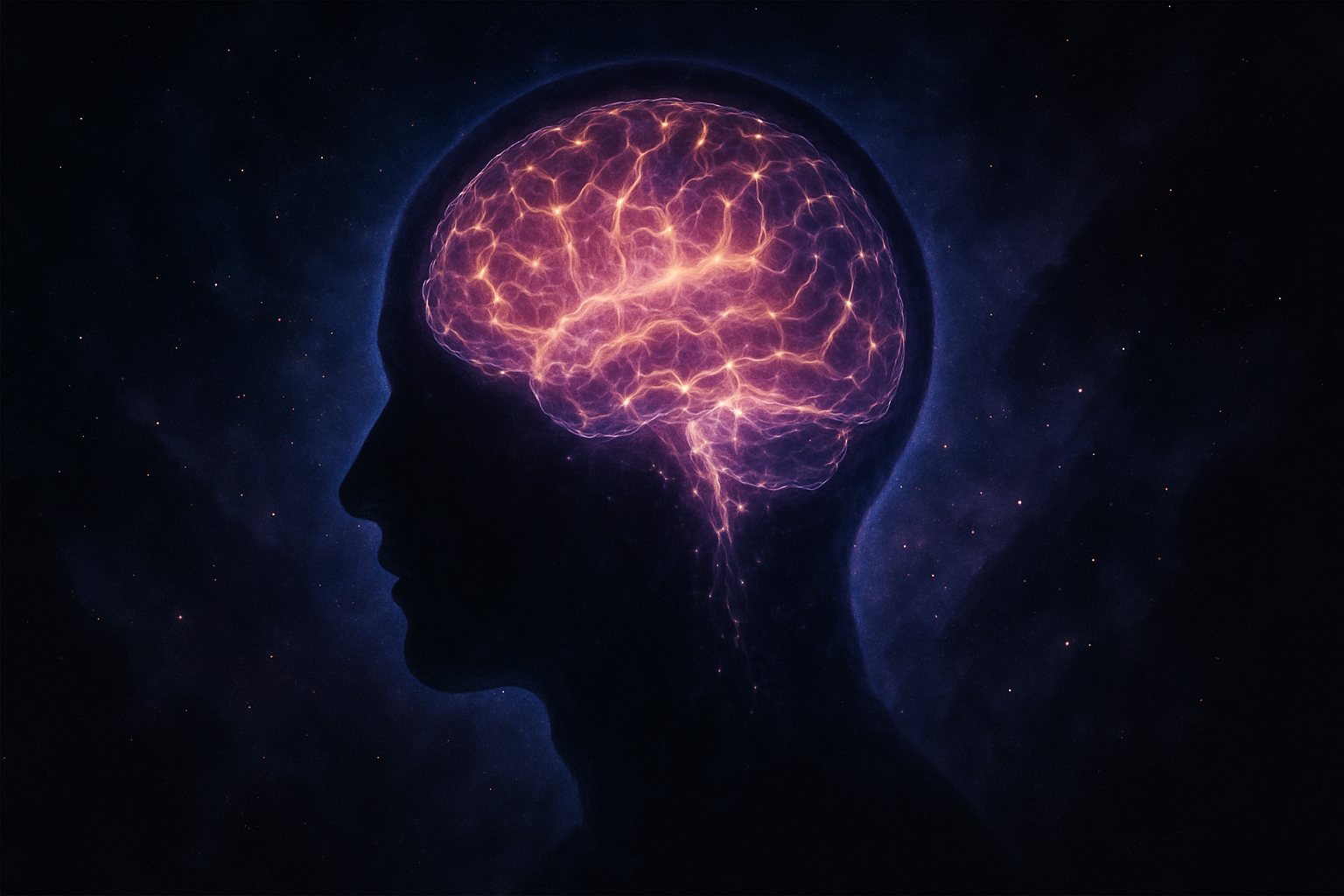
Mirror neurons form what neuroscientists call a simulation system — an internal theater where your brain rehearses realities that have not yet occurred. When you watch a skilled musician play, your motor cortex activates as if your own fingers were on the keys. When you vividly imagine walking into your dream home, your brain encodes that experience with the same neural signatures as genuine physical memory.
This is not passive daydreaming. Research published in NeuroImage and elsewhere has demonstrated that mental simulation activates nearly identical neural pathways as actual experience — including areas governing sensory input, emotional encoding, and motor preparation. The brain, quite literally, begins rehearsing your future.
What this means for manifestation is radical: your nervous system does not wait for reality to arrive before it starts adapting to it. Through the mirror neuron network and the broader predictive processing architecture of the brain, you can begin shaping your neurological identity — your default emotional state, your attentional filters, your behavioral responses — before the external circumstances exist.
"The brain is not a passive receiver of reality. It is an active constructor of it — constantly simulating, predicting, and generating the world it expects to inhabit."
— Karl Friston, neuroscientist and pioneer of the Free Energy Principle
Friston's Free Energy Principle suggests that the brain operates as a prediction machine, minimizing surprise by continuously updating its internal model of the world. When you consistently feed it vivid, emotionally resonant simulations of your desired reality, you are not engaging in wishful thinking — you are updating the model. And the brain, ever efficient, begins orienting perception, attention, and behavior toward confirming what it already "knows" to be true.
Mirror Neurons, Manifestation, and the Emotional Frequency Bridge
Here is where the science becomes genuinely mystical. Mirror neurons do not merely simulate actions — they simulate emotional states. The same neural architecture that allows you to feel another person's grief or joy also allows you to inhabit the emotional reality of your future self. This is the bridge between neuroscience and what spiritual traditions have long called "living from the end" — a teaching emphasized by Neville Goddard and echoed in modern quantum manifestation frameworks.
The key mechanism is this: emotions are not just responses to reality. They are signals that encode experience into long-term memory and neural structure. Research on state-dependent learning shows that information encoded during a particular emotional state is more readily accessed when that same emotional state is re-entered. When you simulate your desired reality with genuine emotional resonance — not just visual imagination but the felt sense of already living it — you create deeply encoded neural pathways that begin organizing your perception and behavior accordingly.
This is why hollow visualization often fails. If you imagine wealth while feeling scarcity, your mirror neuron system simulates the emotional truth beneath the image, not the image itself. The brain encodes what you feel, not what you picture. This is a distinction that changes everything about how we approach conscious creation.
- Emotional fidelity matters more than visual detail. Your brain encodes feeling-states with greater neurological priority than visual content.
- Repetition creates consolidation. Repeated simulation strengthens the synaptic pathways associated with your desired reality, making it progressively more "familiar" to your nervous system.
- The body must participate. Mirror neurons are deeply somatic — engaging breath, posture, and physical sensation during visualization dramatically amplifies neural encoding.
Practical Techniques: Activating the Mirror Neuron Manifestation Loop
Understanding the neuroscience is only the beginning. The real transformation happens when you deliberately architect your simulation practice with these principles in mind. Here are four evidence-informed techniques you can begin today:
1. Third-Person Witnessing, Then First-Person Embodiment. Begin your visualization by watching yourself in your desired future — as if observing a film. Research by psychologist Ethan Kross suggests that self-distancing (observing yourself in third person) reduces anxiety and increases clarity. Once the scene feels coherent and emotionally safe, shift perspective: step into the visualization and inhabit it fully in first person. Feel the floor beneath your feet, the temperature of the room, the specific texture of your emotional state. This transition activates the full mirror neuron encoding sequence.
2. Mirror Neuron Priming Through Role Models. Before your visualization practice, spend five to ten minutes watching, reading about, or deeply imagining someone who already inhabits your desired reality. Your mirror neuron system will begin firing as if you are that person — downloading their posture, their confidence, their attentional style. This is not imitation; it is neurological priming. You are warming up the simulation circuitry before inserting your own future self into the theater.
3. Somatic Anchoring with Sound. The auditory cortex is deeply integrated with the mirror neuron system. Choose a specific tone, frequency, or piece of music that resonates with your desired emotional state — ideally something in the 432 Hz or 528 Hz range, which many sound healing practitioners associate with coherence and cellular resonance. Play this during your visualization. Over time, the sound becomes a neurological anchor that instantly reinstates the emotional-neural state you are encoding, even outside formal practice.
4. The Felt Future Journaling Method. Immediately after visualization, write three to five sentences in the present tense describing your emotional experience as if it is happening now. Not "I will feel..." but "I feel..." This engages language centers in the left hemisphere to consolidate what the right hemisphere and mirror neuron system have just experienced, creating whole-brain encoding of your desired reality.
When Neuroscience Meets the Quantum Field
There is a deeper layer worth exploring. Some researchers working at the intersection of quantum biology and consciousness studies — including those influenced by the Orch-OR theory of Penrose and Hameroff — propose that consciousness itself may operate through quantum processes in the microtubules of neurons. If this is correct, the coherent emotional states generated during mirror neuron simulation may not only reshape your brain's predictive model — they may influence the probabilistic field of events your consciousness collapses into experience.
This remains at the frontier of science, where certainty dissolves into possibility. But the convergence is striking: ancient wisdom traditions, quantum physics, and modern neuroscience are all pointing toward the same radical conclusion — that consciousness is not a passive witness to reality but an active participant in its construction.
Quantress users who combine frequency-based sound tools with structured mirror neuron visualization consistently report accelerated shifts in emotional baseline, heightened synchronicity, and a measurable reduction in the gap between intention and manifestation. Tools like Quantress leverage precisely this integration — using harmonic resonance to deepen the somatic dimension of simulation, amplifying the neural encoding that makes your desired reality feel inevitable rather than merely possible.
Begin the Rehearsal Today
The invitation here is not to believe anything on faith. It is to experiment with your own nervous system as the laboratory. Your brain is already simulating constantly — constructing its best prediction of what comes next based on the emotional data you feed it. The only question is whether you are doing this deliberately or by default.
Mirror neurons and manifestation are not separate domains — one belonging to science, the other to spirit. They are two languages describing the same elegant truth: that reality, at its deepest level, is responsive to the coherent attention of a conscious, feeling mind. Your simulation system is running right now. The only question worth asking is: what are you rehearsing?