Manifestation
Mirror Neurons and Manifestation: How Your Brain Simulates the Reality You Want to Attract
Quantress · March 2, 2026
Mirror neurons fire identically whether you act or vividly imagine — and this neurological fact may be the missing link between visualization and real-world results. Discover how deliberately activating your brain's simulation system accelerates conscious creation.
In 1992, a team of neuroscientists at the University of Parma made a discovery so unexpected it rewrote the foundational rules of how brains — and perhaps realities — are built. While studying macaque monkeys, researcher Giacomo Rizzolatti observed that the same neurons firing when a monkey performed an action also fired when the monkey watched someone else perform it. The brain, it seemed, could not fully distinguish between living an experience and witnessing one. These were mirror neurons — and their implications extend far beyond motor learning into the deepest chambers of consciousness, empathy, and yes, manifestation itself.
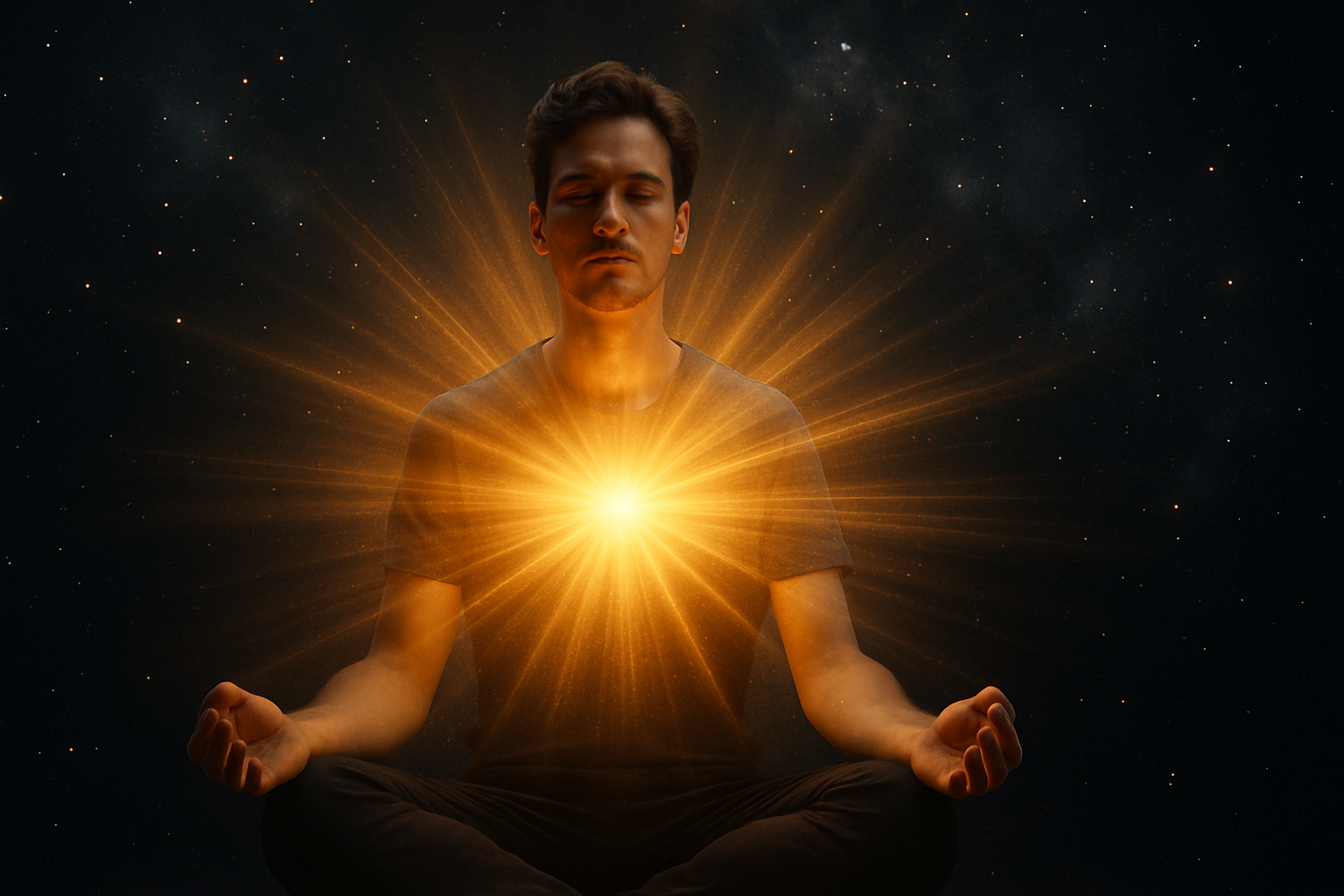
The connection between mirror neurons and manifestation is not metaphorical. It is neurobiological. When you vividly imagine a future reality — a thriving creative business, a deeply loving relationship, radiant physical health — your brain begins constructing that reality at the cellular level. Mirror neurons do not care whether the input is externally physical or internally imagined. They fire. They wire. They build the neural scaffolding of experiences you have not yet had but are, in the most literal sense, already beginning to live.
The Simulation Engine Hidden in Your Skull
Neuroscientist V.S. Ramachandran famously called mirror neurons "the neurons that shaped civilization." While that claim has sparked spirited debate in academic circles, what remains uncontested is their role in neural simulation — the brain's extraordinary ability to model realities it is not currently experiencing. Functional MRI studies have consistently shown that mental imagery activates the same primary visual cortex regions as actual visual perception. Imagined motor movements recruit the same motor cortex pathways as physical movement. The brain is, at its core, a prediction and simulation machine.
This is where the science of manifestation stops being merely philosophical and becomes anatomically fascinating. The traditional spiritual teaching — "feel it as if it's already real" — maps almost perfectly onto what neuroscience describes as embodied simulation. When you engage in vivid, emotionally charged visualization, you are not daydreaming. You are conducting a neurological rehearsal. You are building synaptic pathways, conditioning your autonomic nervous system, and tuning your reticular activating system (RAS) — the brain's attention filter — to recognize opportunities aligned with your visualized outcome.
"The brain does not know the difference between something that is vividly imagined and something that is real."
— Dr. Joe Dispenza, neuroscientist and researcher in epigenetics and neuroplasticity
The RAS is particularly significant here. This small but mighty network of neurons acts as a gatekeeper for the approximately 11 million bits of sensory data your nervous system processes every second — filtering it down to the roughly 40 bits your conscious mind actually perceives. When you repeatedly simulate a desired reality with emotional intensity, you are quite literally reprogramming your RAS to flag relevant information, people, and synchronicities as worthy of conscious attention. What mystics call "signs from the universe," neuroscience might call RAS-mediated pattern recognition. Both descriptions point to the same elegant mechanism.
Emotional Frequency: The Missing Variable in Most Visualization Practices
Here is where many visualization practices fall short, and where the bridge between neuroscience and quantum consciousness becomes most illuminating. Mirror neurons are not activated by passive, detached imagining. Research on motor imagery, particularly studies published in journals like NeuroImage and Brain and Cognition, consistently demonstrates that neural simulation is most robust when accompanied by genuine emotional and somatic engagement. The body must be involved. The feeling must be real.
From a quantum field perspective, this aligns with what researchers studying heart-brain coherence at the HeartMath Institute describe as a measurable electromagnetic state. When the heart and brain enter coherence — a synchronized, harmonious rhythm generated through genuine positive emotion — the body's electromagnetic field expands and shifts measurably. This isn't poetry; it's recorded with magnetometers. The field your body broadcasts changes based on your internal emotional state.
The practical implication is profound: manifestation is not primarily a cognitive exercise — it is a somatic one. Your mirror neuron system needs emotional signal, not just intellectual instruction. When you simulate your desired reality, the nervous system asks not "what am I thinking?" but "what am I feeling?" The emotion is the carrier wave. The visualization is the content riding upon it.
Three Neuroscience-Informed Techniques You Can Practice Today
Understanding the mirror neuron-manifestation connection transforms how you approach your practice. Here are three concrete techniques grounded in neurological principles:
- Embodied Future Self Visualization (10 minutes daily): Rather than watching yourself in a mental movie from the outside, step into the first-person perspective of your future self. See through their eyes. Feel the texture of what they touch, the temperature of their environment, the specific quality of their emotions. This first-person embodiment is what activates mirror neuron simulation most powerfully. Close your eyes, slow your breath to six cycles per minute to induce heart-brain coherence, and inhabit the future reality as a lived present moment — not a wished-for future.
- Behavioral Mirroring with Intentional Role Models: Your mirror neuron system is constantly absorbing the behavioral and emotional patterns of those around you. Deliberately and consciously choose whose reality you are simulating. Spend time — in person, through video, through biography — with people who are already living expressions of what you wish to create. Let your nervous system soak in their patterns. This is not imitation; it is neural entrainment. Ancient cultures called it discipleship. Neuroscience calls it vicarious learning through mirror neuron activation.
- Sound Frequency Anchoring: Specific sound frequencies have been shown to support theta brainwave states (4–8 Hz), the neurological window during which the subconscious mind is most plastic and receptive. Conducting your visualization practice while listening to binaural beats or Solfeggio-tuned music in the theta range dramatically amplifies the depth of neural simulation. Quantress users who combine frequency-aligned audio environments with embodied visualization frequently report accelerated shifts in both internal state and external circumstance — describing a qualitative difference in how "real" their simulations feel during these sessions.
Collapsing the Distance Between Now and the Reality You're Calling In
There is a quantum concept worth sitting with here: the observer effect. In quantum mechanics, the act of observation influences the state of a particle. Whether this principle scales from subatomic phenomena to macroscopic lived reality remains one of science's most charged debates. But consider this — if consciousness itself participates in shaping what is observed at any level of reality, then the quality and direction of your attention becomes the most consequential force you command.
The mirror neurons and manifestation framework suggests that you are, right now, continuously simulating realities. The only question is whether you are doing so consciously or by default — mirroring the anxieties of your social feed, the fears embedded in your past, or the deliberate, emotionally anchored vision of the life your soul is reaching toward. The mechanism runs whether you direct it or not. Your neurology is always manifesting something.
What changes when you understand this is not the law governing the system — it is your relationship to your own agency within it. You stop waiting for reality to change before you feel different. You recognize that the feeling must come first, because neurologically, it is the feeling that writes the code. The simulation precedes the solidification. The interior architecture precedes the exterior expression.
This is ancient wisdom dressed in the language of 21st-century neuroscience. The mystics said: be it before you see it. The neuroscientists say: the brain cannot distinguish vivid simulation from lived experience. They are describing the same miracle from opposite directions — and meeting, inevitably, at the same luminous center.
Begin tonight. Slow your breath. Enter the theta space. Step into the body of the person you are becoming. Feel what they feel. Let your mirror neurons do what they were designed to do — build the neural reality of an experience worth living into. The distance between where you are and where you are going is measured not in time, but in the depth of your willingness to simulate it as already true.