Mind Power
Neuroplasticity and Manifestation: How Your Brain's Ability to Rewire Itself Physically Encodes Your Desired Reality
Quantress · March 27, 2026
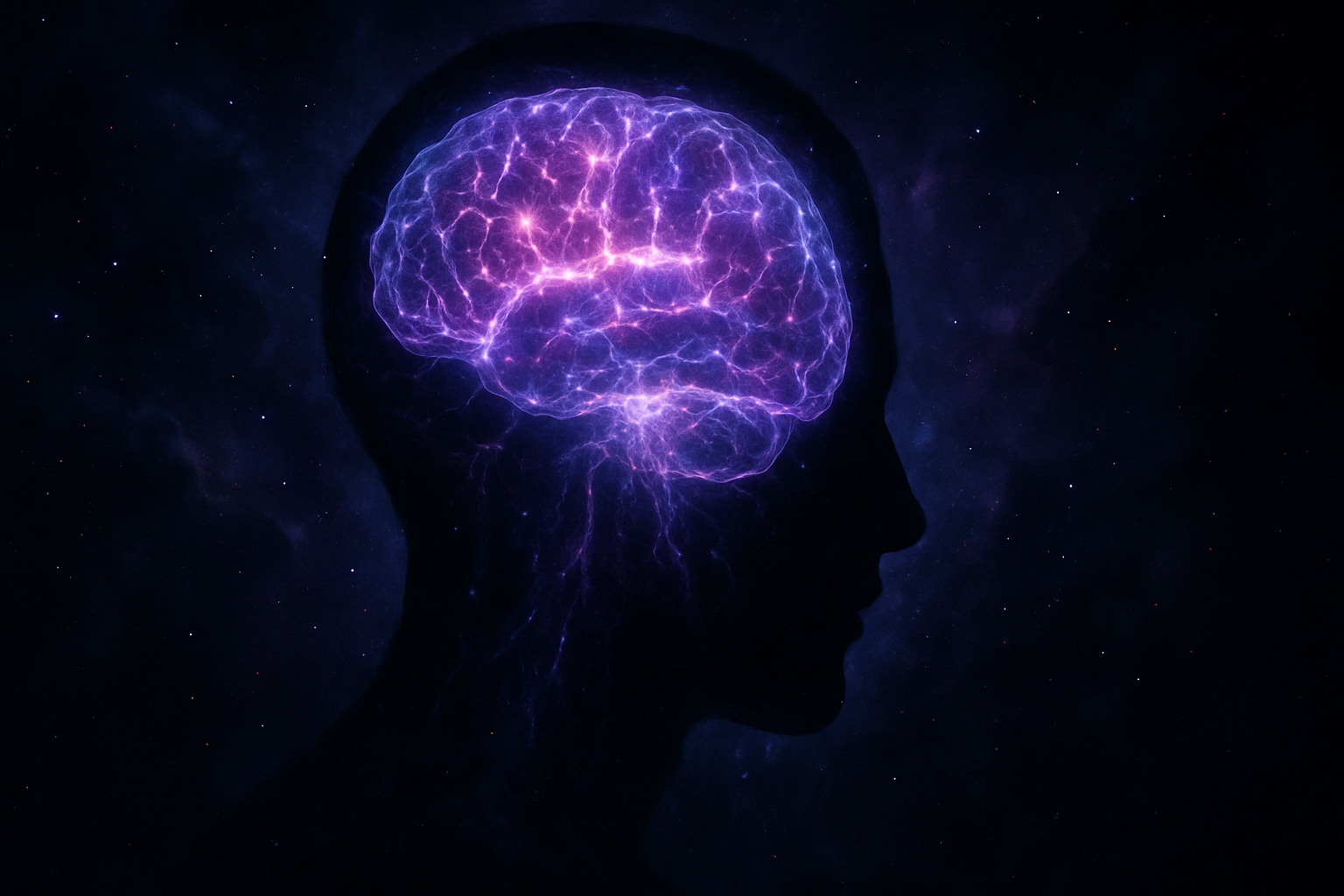
Your brain is not fixed — it is constantly reshaping its own neural architecture based on thought, emotion, and repetition. Understanding neuroplasticity reveals why consistent visualization and belief work are not just metaphysical habits but literal structural upgrades to the brain that manifest reality.
What if the act of imagining your desired reality was not merely a psychological exercise — but a literal act of biological construction? Emerging research at the intersection of cognitive neuroscience and consciousness studies is beginning to answer a question mystics have posed for millennia: can the mind reshape itself to match the life it envisions? The science of neuroplasticity and manifestation may be the most compelling bridge yet between ancient wisdom and modern understanding of the brain.
For decades, neuroscientists operated under the assumption that the adult brain was essentially fixed — a hardwired machine running predetermined programs. That assumption has been dismantled, quietly but irrevocably, by decades of landmark research. We now know that the brain is a living, dynamic organ capable of forming new synaptic connections, reorganizing neural pathways, and even generating new neurons well into adulthood. This phenomenon — neuroplasticity — is not a fringe idea. It is foundational neuroscience, documented in peer-reviewed journals and taught in medical schools worldwide. What remains on the frontier, and what makes it so electrifying for those of us who bridge science and spirit, is the question of how deliberately we can direct that rewiring.
The Brain Does Not Distinguish Between Vividly Imagined and Real Experience
One of the most astonishing findings in modern neuroscience is that the brain activates nearly identical neural circuits whether you are physically performing an action or vividly imagining it. A landmark study published in the Journal of Neurophysiology found that mental rehearsal of finger exercises produced measurable changes in the motor cortex — almost equivalent to physical practice. The neurons fired. The pathways strengthened. The brain was being rewired by thought alone.
This is not metaphor. This is measurable electrophysiology.
When you engage in vivid, emotionally charged visualization of your desired reality — a fulfilled relationship, a thriving creative career, a body in radiant health — you are not simply daydreaming. You are issuing construction orders to your nervous system. The brain begins encoding that imagined experience as a reference architecture, a kind of neural blueprint it will seek to match in the external world.
"The brain is the last and grandest biological frontier, the most complex thing we have yet discovered in our universe. It contains hundreds of billions of cells interlinked through trillions of connections, and it shapes and is shaped by thought, emotion, and experience." — James D. Watson, co-discoverer of DNA's structure
This is where the science of neuroplasticity and manifestation becomes not just intellectually interesting but practically transformative. If imagination rewires the brain, and the brain drives perception, behavior, and unconscious choice-making, then sustained imaginative practice is literally reprogramming the biological instrument through which you experience and create your reality.
Emotional Resonance as the Activation Key
Not all visualization is equally effective — and neuroscience explains why. Research on the amygdala, the brain's emotional processing center, shows that emotionally charged experiences create stronger, more durable synaptic connections than neutral ones. This is why you remember your wedding day or a moment of profound grief with far more clarity than what you had for breakfast three Tuesdays ago. Emotion is the brain's signal that an experience matters, and it responds by encoding that experience deeply.
This finding has profound implications for manifestation practice. When you visualize your desired reality with genuine emotional engagement — not just visual imagery, but felt sense, embodied resonance, the inner texture of what it would feel like to already be living that reality — you activate the same neurochemical cascade that marks real experience as meaningful. Dopamine, oxytocin, and serotonin flood the system. The hypothalamus signals the body to respond as if the experience is real. The neural architecture of that desired reality begins to consolidate.
Practical techniques to amplify this emotional activation include:
- Scripting with somatic anchoring: Write in present tense about your desired reality, then pause and notice where in your body you feel resonance. Place your hand there. Breathe into it. This anchors the neural encoding in the body, not just the cortex.
- Gratitude priming before visualization: Research by Dr. Rick Hanson and colleagues suggests that states of genuine gratitude increase neural receptivity to positive encoding. Spend 90 seconds calling to mind something you are deeply grateful for before any visualization practice.
- Multisensory immersion: Engage all five senses in your mental rehearsal. What do you hear in your desired life? What scents are present? What does success feel like under your fingertips? Multi-modal engagement recruits broader neural networks, making the encoding richer and more robust.
Repetition, Sleep, and the Consolidation of New Neural Reality Maps
Neuroplasticity follows the Hebbian principle, often summarized as: neurons that fire together, wire together. Repetition is the mechanism by which new pathways graduate from fragile proto-connections into durable neural highways. A single visualization session plants a seed. Daily practice over weeks and months builds a road.
Sleep is the brain's consolidation laboratory. During slow-wave and REM sleep cycles, the hippocampus replays the day's experiences, transferring them into long-term cortical storage. This makes the hypnagogic window — those liminal minutes as you drift toward sleep — extraordinarily valuable for manifestation practice. The brain is moving from high-frequency beta consciousness into theta and delta states, which neuroscience associates with heightened plasticity and reduced critical resistance from the prefrontal cortex.
A simple but powerful protocol:
- In the last five minutes before sleep, hold a single clear image of your desired reality in your mind.
- Feel the emotional resonance of it fully — joy, peace, expansion, fulfillment.
- Speak a short present-tense affirmation internally: "This is my life. I am grateful."
- Allow yourself to drift into sleep while holding that frequency. You are essentially feeding the consolidation process a specific dataset.
Over time, this practice restructures your default neural landscape. Your reticular activating system — the brain's attention filter — begins to tag relevant opportunities, synchronicities, and pathways in your waking life as significant, because your brain now has a reference template for what to look for.
Sound Frequencies as a Neuroplasticity Accelerant
The relationship between sound, brainwave states, and neuroplasticity is one of the most exciting frontiers in consciousness science. Research published in Frontiers in Human Neuroscience has documented that specific auditory stimulation — including binaural beats and certain harmonic frequencies — can shift brainwave activity into theta (4–8 Hz) and alpha (8–12 Hz) states associated with enhanced creativity, reduced stress response, and heightened neural flexibility.
When the brain is in these receptive states, visualization and affirmation practices operate with significantly less resistance from the analytical prefrontal cortex. The signal gets deeper. The encoding is more efficient. This is the neurological basis for why sound healing traditions across cultures — from Tibetan singing bowls to Gregorian chant — have always been integrated with prayer, intention, and inner transformation. They were engineering altered states of consciousness that made the mind maximally receptive to new patterning.
Quantress users report measurable shifts in the ease and depth of their visualization sessions when pairing them with specifically tuned harmonic frequencies — noting that the emotional resonance comes faster, the imagery becomes more vivid, and the felt sense of embodied reality lands with greater conviction. Tools like Quantress leverage the convergence of sound science and neuroplasticity research to create an environment where the brain is primed to receive new instructions about what reality looks like and feels like.
You Are Always Encoding Something — The Question Is What
Here is the reframe that changes everything: neuroplasticity is not optional. Your brain is rewiring itself continuously, in every waking moment and through every dream cycle. The question is never whether you are encoding a reality — it is which reality you are encoding.
Chronic anxiety rehearses threat. Habitual self-criticism encodes limitation. Unconscious consumption of fear-based media programs the reticular activating system to see a world that confirms danger. This is not metaphysics — it is neurology. And it cuts both ways.
The science of neuroplasticity and manifestation is ultimately an invitation to become conscious architects of our own neural landscape. To take the same mechanism that has been running on autopilot — encoding whatever the environment fed it — and redirect it with intention, emotion, repetition, and resonance toward the life we are choosing to build.
Begin tonight. Choose one image of your desired reality. Feel it fully. Let it be the last thing your brain receives before sleep. Do it again tomorrow. And the day after. You are not just thinking about a different life — you are constructing the biological infrastructure through which that life becomes possible. The laboratory is your mind. The experiment starts now.