Mind Power
Neuroplasticity and Meditation: How Sustained Contemplative Practice Physically Reshapes Neural Architecture and Accelerates Subconscious Reprogramming
Quantress · April 21, 2026
Modern neuroscience has confirmed that meditation does not merely calm the mind — it structurally rewires the brain's gray matter, synaptic density, and default mode network over time. Understanding exactly how this biological transformation unfolds reveals why consistent practice is among the most powerful subconscious reprogramming tools available.
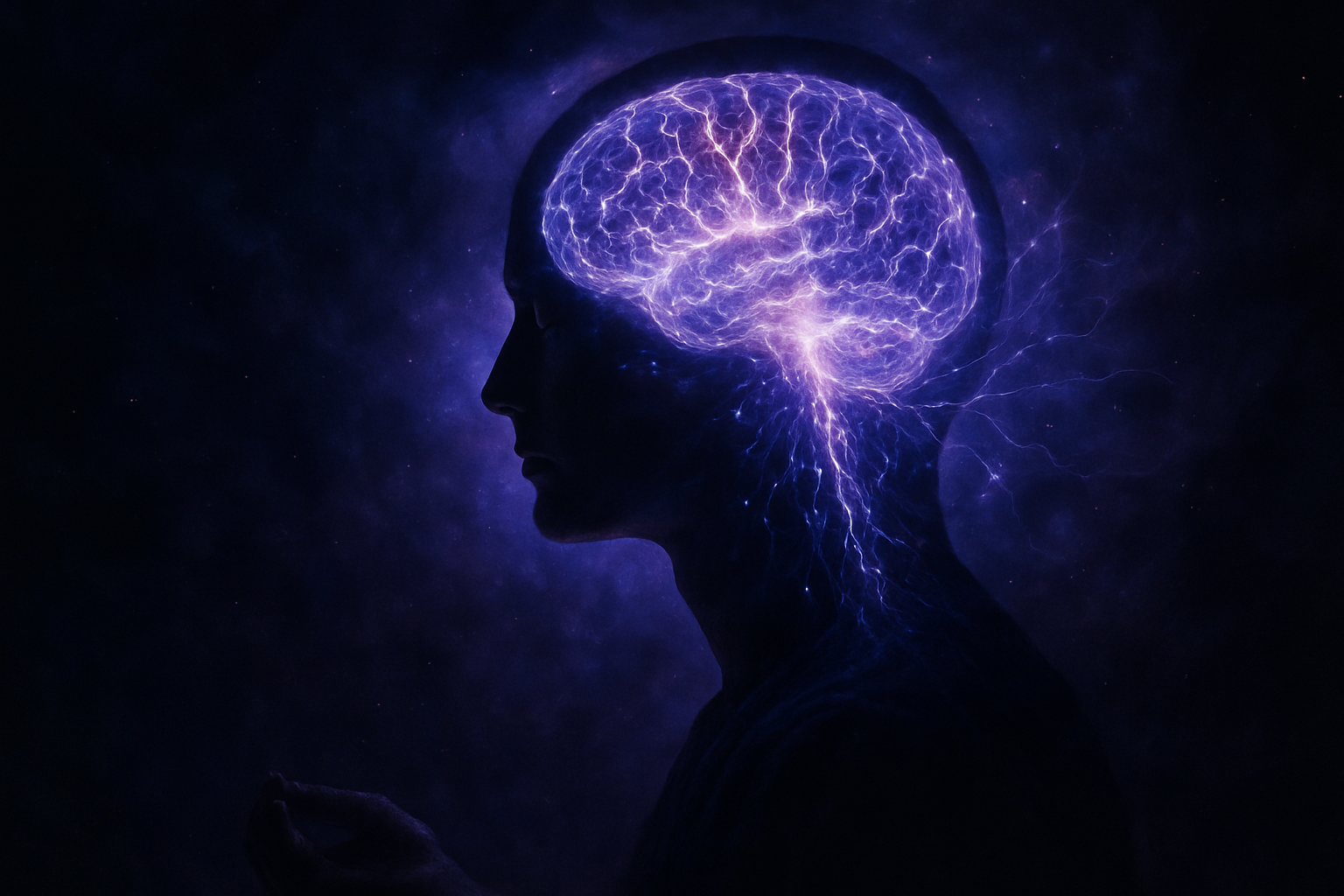
What if the mind you woke up with this morning is not the mind you have to keep? Science is now confirming what contemplative traditions have whispered for millennia: the brain is not a fixed instrument but a living, breathing architecture — one that rewires itself in response to how you direct your attention. The intersection of neuroplasticity and meditation has become one of the most electrifying frontiers in modern neuroscience, offering a biological blueprint for something that once sounded entirely mystical — the deliberate transformation of consciousness itself.
For most of the twentieth century, neuroscientists operated under a doctrine of neural determinism: the brain you were born with, shaped by genetics and early childhood, was essentially the brain you would carry to your grave. Then came the revolution. Researchers like Dr. Michael Merzenich at UC San Francisco began demonstrating that cortical maps could be redrawn through experience, and the word neuroplasticity entered the cultural lexicon. But it was the pioneering collaboration between the Mind and Life Institute and contemplative practitioners — most famously, the studies on long-term meditators conducted at the University of Wisconsin-Madison — that truly cracked open the mystery. The data was unambiguous: meditation doesn't just calm the mind. It physically rebuilds the brain.
The Science of Structural Transformation: What Meditation Actually Does to Brain Tissue
When neuroscientist Sara Lazar and her team at Massachusetts General Hospital used MRI imaging to compare the brains of experienced meditators with non-meditators, the results were striking. Long-term practitioners showed measurably increased cortical thickness in the prefrontal cortex — the region responsible for attention, decision-making, and what we might call conscious intentionality. More remarkably, this thickening was correlated with years of practice, suggesting a dose-dependent biological response to contemplative training.
The hippocampus — our center of learning, memory consolidation, and emotional regulation — also shows increased gray matter density in regular meditators. Simultaneously, the amygdala, that ancient alarm system responsible for fear responses and stress reactivity, demonstrates measurable shrinkage in volume following consistent mindfulness practice. This is not metaphor. This is tissue. This is the subconscious being physically reorganized.
What makes this even more remarkable from a quantum perspective is the speed at which these changes can begin to manifest. A landmark study published in Psychiatry Research: Neuroimaging by Hölzel et al. (2011) found significant changes in gray matter concentration after just eight weeks of Mindfulness-Based Stress Reduction (MBSR) practice — approximately 27 minutes of daily meditation. The brain doesn't wait for years of silent retreats to begin its renovation. It starts almost immediately.
"The brain we develop reflects the life we lead." — Dr. Richard Davidson, neuroscientist and pioneering researcher of contemplative neuroscience at the University of Wisconsin-Madison
Subconscious Reprogramming: Where Neuroplasticity Meets Inner Architecture
Understanding the relationship between neuroplasticity and meditation becomes profoundly practical when we consider the subconscious mind. Neuroscientific consensus suggests that approximately 95% of our cognitive activity — our habits, emotional reactions, belief patterns, and behavioral defaults — originates below the threshold of conscious awareness. In other words, you are largely being run by a program you didn't consciously install.
The subconscious operates primarily through what neuroscientists call default mode network (DMN) activity — a constellation of brain regions that activate during self-referential thought, rumination, and automatic behavior. Crucially, research consistently shows that experienced meditators exhibit reduced DMN activity during meditation, and even during resting states, they demonstrate a fundamentally different relationship with the default mode network. They are less captured by it.
This matters enormously for manifestation and consciousness expansion. When you reduce the dominance of unconscious patterning through sustained practice, you create neurological space for new architectures to take root. The brain begins to lay down new synaptic pathways — literally new connections between neurons — that reflect your chosen states of being rather than your inherited conditioning. Repetition, emotional intensity, and focused attention are the three primary variables that accelerate this synaptic rewiring. Meditation, practiced with intention, engages all three simultaneously.
Particularly powerful is the gamma wave state documented in advanced meditators. Research on Tibetan Buddhist monks practicing compassion meditation showed sustained gamma oscillations at approximately 40 Hz — a frequency associated with heightened perception, binding of conscious experience, and what some researchers cautiously describe as expanded states of awareness. These gamma bursts appear to facilitate large-scale neural integration, essentially allowing the brain to synchronize across regions that rarely communicate during ordinary waking consciousness.
Practical Techniques for Accelerating Neural Rewiring Through Meditation
Understanding the science is inspiring. But the real transformation lives in practice. Here are concrete techniques grounded in both neuroscientific research and contemplative wisdom:
- Focused Attention Meditation (FAM): Choose a single anchor — the breath, a candle flame, a mantra vibration. Each time the mind wanders and you return your attention to the anchor, you are literally performing a bicep curl for the prefrontal cortex. This return of attention is the exercise. Research suggests 20 minutes daily produces measurable changes within four to eight weeks.
- Open Monitoring Meditation: Rather than narrowing focus, expand awareness to include all sensory experience without attachment or judgment. This trains metacognitive awareness — the ability to observe your thoughts without being consumed by them — and has been shown to reduce default mode network hyperactivity.
- Visualization with Embodiment: Neuroscience confirms that the brain processes vivid mental imagery and real experience through largely overlapping neural circuits. When you combine deep meditation with emotionally charged visualization of your desired states, you accelerate the encoding of new neural pathways. Feel the state. Don't just think it.
- Sound-Anchored Meditation: Tonal frequencies, particularly in the theta range (4–8 Hz) and alpha range (8–12 Hz), have been shown to induce states of heightened neuroplasticity and receptivity. Tools like Quantress leverage carefully designed harmonic frequencies to entrain brainwave states that are neurologically primed for subconscious reprogramming — making the meditation session itself exponentially more efficient.
- Pre-Sleep Theta Practice: The hypnagogic state — that liminal threshold between waking and sleep — is characterized by natural theta dominance and represents one of the most potent windows for subconscious imprinting. A 10-minute body scan or intention-setting practice in this state can accelerate reprogramming in ways that midday practice simply cannot match.
The Quantum Dimension: Consciousness as Cause, Not Just Effect
Here is where the inquiry deepens into genuinely radical territory. The conventional neuroscientific model treats consciousness as an emergent property of brain activity — the brain produces the mind. But a growing minority of physicists and consciousness researchers, drawing on quantum mechanics, are entertaining a more provocative possibility: that consciousness may play a causative role in the physical processes of the brain, not merely a reactive one.
Quantum biologists like Dr. Roger Penrose and Dr. Stuart Hameroff have proposed, through the Orchestrated Objective Reduction (Orch-OR) theory, that quantum processes within microtubules — protein structures inside neurons — may be fundamental to conscious experience. If consciousness is, at some level, a quantum phenomenon, then intentional states of awareness may interact with neural architecture in ways that classical neuroscience is only beginning to frame.
This doesn't diminish the neuroscience. It expands it. Whether through classical synaptic mechanisms or quantum-level interactions, the data points consistently in one direction: where sustained attention goes, neural structure follows. The meditator is not passively observing their brain change. In a very real sense, they are the architect of the change itself.
Quantress users who incorporate harmonic resonance protocols alongside their meditation practice consistently report accelerated shifts in emotional baseline, dream vividness, and what many describe as an intuitive clarity that begins to permeate daily decision-making — precisely the phenomenological signatures you would expect from a brain undergoing rapid synaptic reorganization.
You Are Not Hardwired — You Are in Process
The convergence of neuroplasticity and meditation research offers something rare in both science and spirituality: genuine, evidence-based hope. The brain you have today is the sum of all the mental habits, emotional patterns, and attentional choices that preceded this moment. The brain you will have tomorrow is already being shaped by what you choose to practice now.
This is not wishful thinking. This is structural biology. Every moment of sustained, intentional awareness leaves a physical trace. Every return of scattered attention to chosen presence is a small act of neural renovation. Over weeks and months, these traces accumulate into measurably different tissue, measurably different response patterns, measurably different selves.
Begin tonight. Ten minutes. A quiet anchor for your attention. The renovation has already started — you are simply now the conscious contractor. And the architecture you build from here is, for perhaps the first time, entirely yours to design.