Quantum
Quantum Coherence and the Brain: How Synchronized Subatomic States May Amplify Conscious Intention and Accelerate Manifestation
Quantress · May 2, 2026
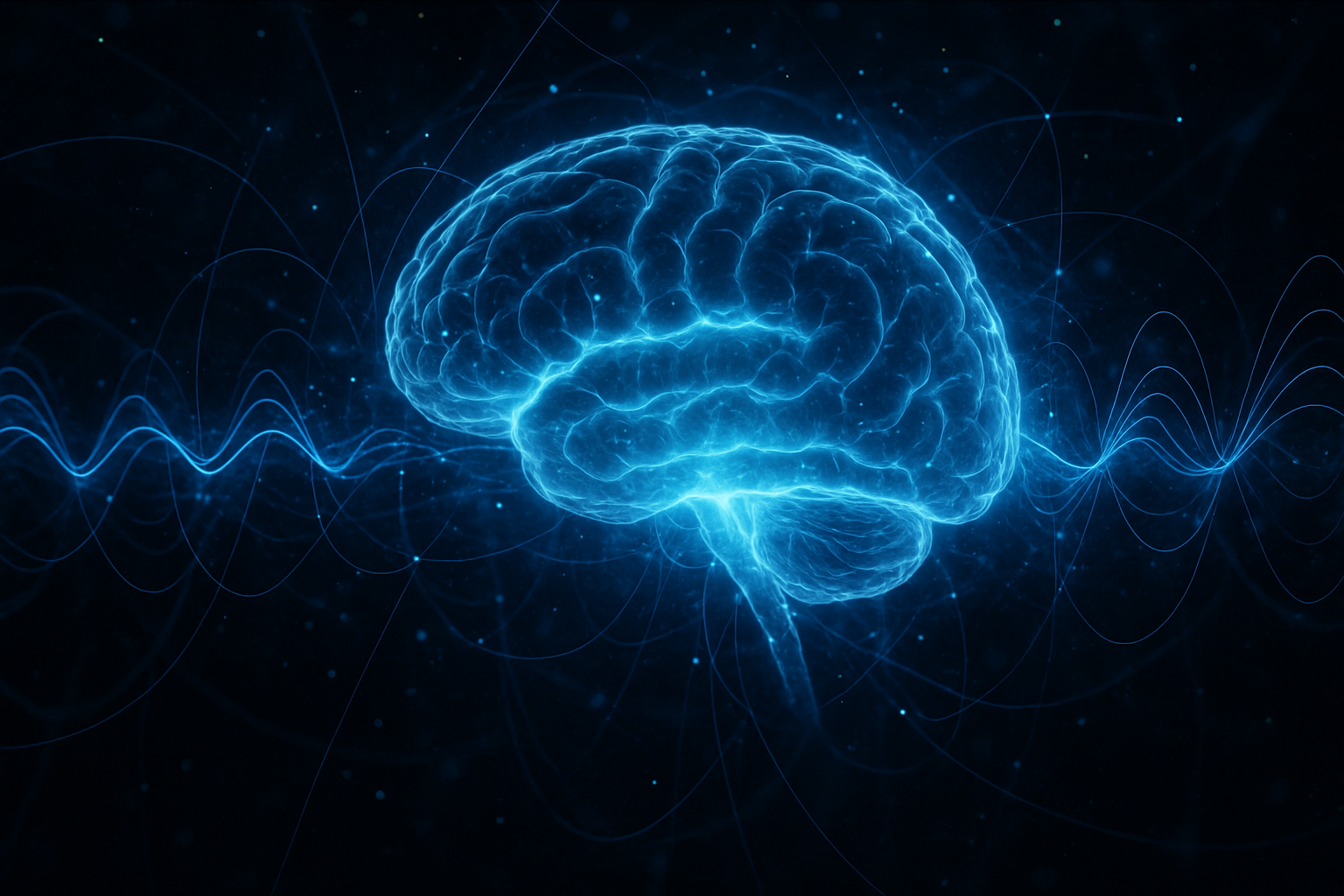
Quantum coherence — the synchronized behavior of subatomic particles — may not be limited to laboratory conditions. Emerging neuroscience suggests that coherent states within biological tissue could form the physical basis for focused intention and accelerated reality formation.
Something extraordinary happens in the space between a thought and its manifestation. Scientists call it a mystery. Mystics call it magic. But emerging research into quantum coherence and the brain suggests there may be a precise, measurable mechanism linking conscious intention to observable reality — one that operates at the subatomic level, far beneath the threshold of ordinary neural firing.
For decades, the dominant model of consciousness treated the brain like a sophisticated computer: neurons fire, signals propagate, thoughts emerge. Clean, linear, mechanical. But that model has always struggled to explain the more luminous aspects of human experience — the sudden flash of creative genius, the uncanny accuracy of intuition, the documented phenomena of intention affecting physical systems. Now, a growing body of research is pointing toward a radically different picture, one in which quantum processes inside the brain don't just passively exist but actively participate in shaping how we think, feel, and perhaps even how we create.
What Quantum Coherence Actually Means — And Why It Matters in Biology
In classical physics, particles behave predictably, following well-defined paths. But in the quantum realm, particles exist in superposition — simultaneously occupying multiple states until observed or measured. Quantum coherence is the phenomenon by which quantum systems maintain this synchronized, wave-like behavior over time and space, allowing particles to act in concert rather than independently. Think of it as a subatomic symphony where every instrument plays in perfect phase.
For years, scientists assumed that biological systems — warm, wet, and noisy as they are — would be far too chaotic to sustain quantum coherence. The expectation was that thermal vibrations would instantly collapse any delicate quantum states. Then came the photosynthesis experiments.
In 2007, researchers at UC Berkeley published findings in Nature demonstrating that photosynthetic complexes in green plants maintain quantum coherence across multiple molecular sites, allowing energy transfer to occur with near-perfect efficiency. The living system wasn't destroying coherence — it was somehow using environmental noise to sustain it. This discovery cracked open the field of quantum biology and raised an electrifying question: if plants harness quantum coherence, what might the human brain be doing with it?
The Orchestrated Objective Reduction Hypothesis and Conscious Intention
No conversation about quantum coherence and the brain is complete without engaging the Orchestrated Objective Reduction (Orch OR) theory, proposed by physicist Sir Roger Penrose and anesthesiologist Stuart Hameroff. Their model suggests that quantum computations occur inside microtubules — protein structures within neurons — and that consciousness itself arises from the collapse of quantum superpositions within these structures.
Crucially, Penrose and Hameroff argue that this is not mere passive processing. The Orch OR model implies that consciousness plays an active, participatory role in collapsing quantum states, meaning that the act of consciously intending or focusing attention is itself a quantum event with physical consequences. In 2014, Hameroff and Penrose published an updated review in Physics of Life Reviews responding to critiques and presenting new evidence from quantum vibrations detected in brain microtubules — vibrations that align with the frequency ranges predicted by their theory.
"The universe begins to look more like a great thought than a great machine."
— Sir James Jeans, physicist and mathematician
This is where science and spiritual practice converge in a genuinely stunning way. If conscious attention is capable of influencing quantum state collapse — even probabilistically, even subtly — then the ancient idea that focused intention shapes physical reality stops being poetic metaphor and starts resembling a testable hypothesis. Your mind may not simply observe the world. It may, in very real quantum terms, participate in constructing it.
How Coherent Brain States Amplify the Signal of Intention
Here is where practical application becomes possible. Research consistently shows that certain brain states dramatically increase neural synchrony — the degree to which different brain regions fire in coordinated, rhythmic patterns. This macroscopic synchrony may create the conditions under which microscopic quantum coherence can extend and amplify, essentially turning up the volume on the brain's quantum signal.
Studies on experienced meditators using EEG have documented profound increases in gamma wave coherence — oscillations between 40 and 100 Hz — during deep meditative states. A landmark study by Antoine Lutz and colleagues at the University of Wisconsin, published in PNAS in 2004, found that long-term Tibetan Buddhist practitioners showed dramatically elevated gamma synchrony compared to novice meditators, particularly during compassion meditation. These weren't localized spikes — they were brain-wide coherent states of an order rarely observed.
The implications are profound. When the brain achieves this level of macroscopic coherence, it may be creating an internal environment where quantum processes can operate more effectively and where intentional focus carries greater energetic weight. In other words, the more coherent your brain state, the more potent your conscious intention may become at the quantum level.
Practical techniques for cultivating these coherent states include:
- Focused attention meditation: Concentrating on a single point — the breath, a mantra, a visualized image — trains the brain to reduce scattered firing and build synchronized gamma activity. Even 20 minutes daily has been shown to measurably alter neural coherence patterns within eight weeks.
- Sound immersion at specific frequencies: Binaural beats and isochronic tones in the gamma range (40 Hz) have been shown in peer-reviewed studies to externally entrain brainwave activity toward coherent states. Listening through headphones while holding a clear intention creates a powerful combined signal.
- Heart-brain coherence practices: Research from the HeartMath Institute demonstrates that when heart rhythm patterns become coherent through techniques like rhythmic breathing and positive emotional focus, the heart sends ascending neural signals that synchronize cortical activity — literally bringing the brain into greater quantum readiness through the heart.
- Intentional breath cycles: Slow, rhythmic breathing at approximately 5 to 6 breaths per minute activates vagal tone and promotes synchronized oscillations between the prefrontal cortex and limbic system — regions critical for both executive intention and emotional resonance.
The Resonance Bridge: Frequency, Intention, and the Manifestation Field
Spiritual traditions have long described the universe as fundamentally vibrational — from the Hindu concept of Nada Brahma (the universe as sound) to the Hermetic principle "everything vibrates." Quantum physics has arrived at a structurally similar conclusion: at the most fundamental level, what we call matter is patterns of energy oscillating in quantum fields. The boundary between "inner" vibration (neural coherence) and "outer" vibration (physical reality) may be far more permeable than classical physics suggested.
This is the terrain where manifestation science becomes genuinely exciting. If your brain is a quantum instrument, then cultivating coherence is not a metaphor for getting in a good mood before journaling your goals — it is a literal tuning of the instrument through which your intentions interface with the quantum substrate of reality.
Quantress users report that pairing harmonic resonance audio with clear intentional focus during coherence-building sessions creates a qualitatively different experience from standard meditation — one characterized by greater clarity of vision, spontaneous insight, and a felt sense of energetic alignment that often precedes tangible shifts in external circumstances. Tools like Quantress leverage precisely calibrated sound frequencies designed to entrain brainwave activity toward those high-coherence states where, according to the science, the signal-to-noise ratio of conscious intention is at its peak.
A simple protocol to try immediately: choose a specific intention — not a wish, but a clear, present-tense statement of what you are calling into being. Spend three minutes in slow rhythmic breathing to establish heart-brain coherence. Then, while listening to 40 Hz gamma entrainment audio, hold your intention in the center of your awareness with relaxed but unwavering focus for fifteen minutes. Notice what arises in the days that follow with genuine scientific curiosity.
Embracing the Experiment
The research into quantum coherence and the brain is still young, contested, and thrillingly incomplete — as all frontier science should be. Not every claim has been definitively proven, and intellectual honesty demands we hold these ideas with both enthusiasm and discernment. But the direction of evidence is increasingly clear: the brain is not a closed classical system, consciousness is not a passive bystander, and the relationship between mind and matter is stranger and more intimate than the materialist worldview allowed.
You are not a helpless observer of a predetermined universe. You are, potentially, a quantum participant in its ongoing creation — and your coherence is your most powerful instrument. The ancient wisdom traditions knew this. The physics is now beginning to catch up. The invitation, for those willing to accept it, is to stop waiting for the science to be complete before beginning the experiment. Your consciousness is the laboratory. Your intention is the hypothesis. Reality, as always, is waiting to respond.