Quantum
Quantum Coherence and Consciousness: How Your Brain May Operate as a Quantum System
Quantress · March 8, 2026
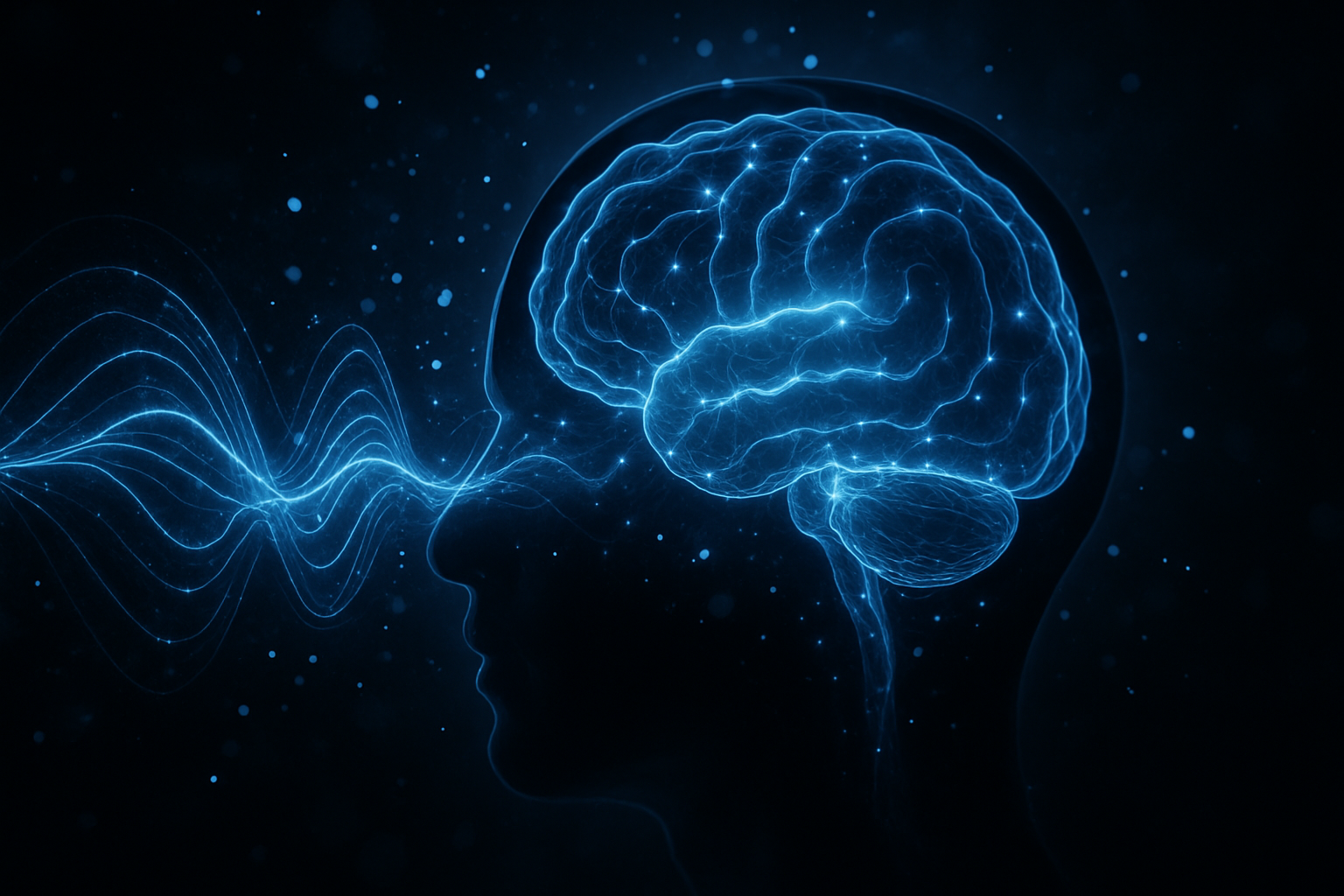
Emerging research suggests the brain may sustain quantum coherence long enough to influence thought, perception, and even manifestation. Discover how the Orch-OR theory and quantum biology are rewriting everything we thought we knew about the mind.
Something extraordinary may be happening inside your skull right now — something that defies the classical, mechanistic model of the brain that most of us were taught in school. Neuroscientists and quantum physicists are increasingly converging on a radical possibility: that quantum coherence consciousness is not a metaphor or a spiritual abstraction, but a genuine biological phenomenon, measurable, reproducible, and profoundly consequential for how we understand the mind, healing, and human potential.
For decades, the dominant view held that the brain was essentially a biological computer — neurons firing in electrochemical cascades, processing information through classical physics alone. But classical physics cannot fully explain the speed of binding, the unity of subjective experience, or the uncanny precision of certain cognitive processes. A growing body of evidence suggests the brain may be exploiting quantum mechanical effects — superposition, entanglement, and coherence — to perform feats of computation and awareness that no silicon machine has yet replicated.
The Orchestrated Objective Reduction Theory: Where Quantum Physics Meets the Mind
The most influential scientific framework for quantum consciousness is the Orchestrated Objective Reduction (Orch-OR) theory, developed by physicist Sir Roger Penrose and anesthesiologist Stuart Hameroff. Their hypothesis centers on microtubules — cylindrical protein structures found inside neurons — as the potential site of quantum computation within the brain.
Microtubules are not passive scaffolding. They are dynamic, responsive structures that self-organize, transmit signals, and — according to Orch-OR — maintain quantum coherence long enough to influence neural processing. The "orchestration" refers to biological inputs that shape quantum computations, while "objective reduction" describes a specific mechanism by which quantum superposition collapses into classical states, potentially giving rise to moments of conscious experience.
In 2014, research published in Physics of Life Reviews by Hameroff and Penrose incorporated experimental findings showing warm quantum coherence in biological systems — directly challenging the long-held objection that the brain is "too warm and wet" for quantum effects to survive. This was a paradigm-shifting moment. If quantum coherence can persist in the warm, noisy environment of a living cell, the door opens to an entirely new model of mind.
"Consciousness is not something that happens in the brain. It is something the universe does, and the brain is a particularly sophisticated way of doing it." — Stuart Hameroff, MD, University of Arizona
This reframing is profound. If consciousness is a fundamental process woven into the fabric of reality — rather than a byproduct of neural complexity — then our inner experience is not an accident. It is the universe becoming aware of itself through you.
Quantum Coherence in Nature: The Biology Is Already Doing It
One of the most compelling pieces of evidence for biological quantum effects comes not from the brain itself, but from photosynthesis. In 2007, researchers at UC Berkeley published findings in Nature demonstrating that quantum coherence plays a direct role in energy transfer within photosynthetic complexes — allowing plants and bacteria to transfer energy with near-perfect efficiency by exploring multiple pathways simultaneously.
If quantum coherence can operate in the warm, wet interior of a leaf cell, the biological precedent is firmly established. The brain, with its extraordinary complexity and evolutionary optimization, becomes an even more compelling candidate for quantum-level processing.
Additional research into cryptochrome proteins in bird navigation has shown that quantum entanglement may underlie the magnetic compass sense of migratory birds — a quantum biological phenomenon now taken seriously by mainstream biophysics. These findings collectively suggest that life has been quietly exploiting quantum mechanics for billions of years, long before humans began debating whether it was theoretically possible.
What this means for quantum coherence consciousness studies is that we are not asking whether biology can sustain quantum effects. We are asking how extensively it does — and what the implications are for our understanding of mind, perception, and healing.
The Practical Dimension: How to Cultivate Quantum States of Awareness
Here is where the science becomes not just intellectually fascinating, but personally transformative. If your brain genuinely operates with quantum properties, then certain practices may directly influence the coherence, depth, and expansiveness of your conscious experience. The following techniques are drawn from both ancient contemplative traditions and emerging research in neuroscience and biophysics.
- Focused Meditation with Coherent Breathing: Research from the HeartMath Institute has demonstrated that heart-brain coherence — achieved through rhythmic breathing patterns like a 5-second inhale and 5-second exhale — measurably synchronizes electromagnetic fields between the heart and brain. This physiological coherence may create optimal conditions for quantum-level neural processes to emerge and stabilize.
- Sound Frequencies and Neural Entrainment: Binaural beats, particularly in the gamma range (40 Hz), have been shown in peer-reviewed studies to increase neural synchrony — a hallmark of both heightened awareness and potential quantum coherence windows. Tibetan singing bowls, tuning forks calibrated to specific frequencies, and overtone chanting have been used for centuries to induce these states. The science now offers a mechanism for why they work.
- Sensory Reduction and Flotation: Research on Restricted Environmental Stimulation Therapy (REST) — commonly known as float tanks — shows significant reductions in cortisol and increases in theta brainwave activity. Reduced classical sensory noise may allow subtler, quantum-scale processes to become more perceptible to awareness. When the loud classical signal quiets, the quantum whisper may grow audible.
- Intention Holding in Meditative States: The quantum Zeno effect — a well-documented quantum mechanical phenomenon in which frequent observation stabilizes a quantum state — has been proposed as a mechanism by which sustained, focused attention might literally hold coherent quantum brain states in place, deepening concentration and enabling non-ordinary cognition.
Try this immediately: Sit quietly, close your eyes, and begin breathing in a 5-5 pattern (five counts in, five counts out). After three minutes, introduce a single tonal sound — a singing bowl recording, a tuning fork, or even a sustained humming at a comfortable pitch. Notice the quality of your awareness. Does something feel more unified, more spacious? You may be cultivating the very conditions your microtubules have been waiting for.
Quantum Coherence, Consciousness, and the Frontier of Sound Healing
The intersection of quantum coherence consciousness and sound healing is perhaps the most exciting frontier of all. Sound is not merely acoustic information — it is organized vibration, and vibration interacts with matter at every scale, including the molecular and quantum scales. When specific frequencies resonate with the geometric structure of microtubules, the cells lining the inner ear, or the crystalline matrices found throughout biological tissue, the potential for resonant amplification of quantum effects becomes genuinely plausible.
This is the territory that ancient healing traditions intuited and modern biophysics is beginning to map. The Hindu concept of Nada Brahma — the universe as sound — the Pythagorean notion of the music of the spheres, and Sufi zikr practices all point to sound as a fundamental organizing principle of consciousness, not merely a sensory experience.
Tools like Quantress are designed precisely for this intersection — offering frequency-calibrated soundscapes and resonance protocols engineered around these principles. Quantress users report measurable shifts in clarity, coherence of thought, and emotional regulation after sustained engagement with frequency-targeted sessions — experiences that align meaningfully with what we would predict if quantum coherence in neural tissue were being optimized through acoustic resonance.
What was once the province of mystics and shamans is becoming the subject of serious scientific inquiry — and the findings are not disproving the ancient wisdom. They are explaining it.
An Invitation to Explore the Quantum Self
The emerging science of quantum coherence and consciousness is not asking you to abandon rationality. It is asking you to expand it — to consider that the self you experience may be operating at depths far more subtle, far more interconnected, and far more extraordinary than the classical model ever allowed.
The peer-reviewed findings are compelling. The theoretical frameworks are sophisticated. But ultimately, the most important laboratory is your own awareness. Begin with the breathing technique above. Experiment with sound. Sit in intentional silence. Notice what happens at the edges of your perception when the neural noise diminishes.
You are not merely a biological machine running electrochemical software. You may be a quantum system woven into the fabric of reality itself — and the practice of expanding your consciousness may be, quite literally, the universe learning to know itself more deeply through you.
The experiment is ongoing. And you are both the scientist and the subject.