Quantum
Quantum Coherence in the Brain: What Orchestrated Objective Reduction Reveals About the Mind's Subatomic Architecture and Its Role in Conscious Manifestation
Quantress · April 20, 2026
Penrose and Hameroff's Orchestrated Objective Reduction theory proposes that quantum coherence inside microtubules may be the physical seat of conscious experience itself. This article maps the science behind biological quantum coherence, examines why it collapses at critical thresholds, and explains how deliberately sustaining coherent states may sharpen the mind's ability to direct reality.
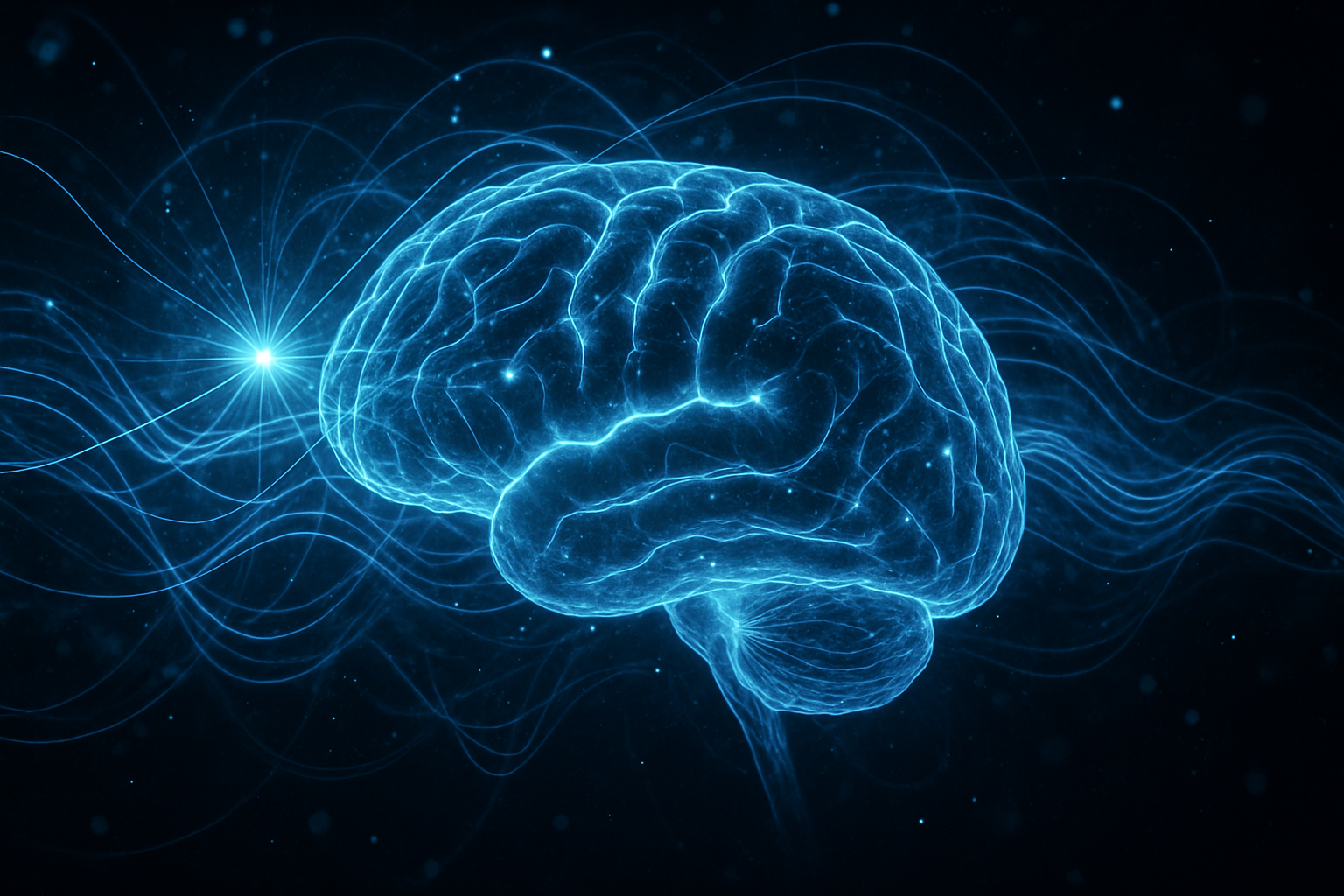
Something extraordinary may be happening inside your skull right now — not merely the electrochemical signaling of neurons, but a dance of quantum events so precise, so coordinated, that some of the world's most respected physicists believe it underlies the very phenomenon of consciousness itself. The emerging science of quantum coherence in the brain is quietly rewriting our understanding of what the mind actually is, and — perhaps more provocatively — what it might be capable of doing.
The Orchestrated Objective Reduction Hypothesis: A New Map of the Mind
In 1994, mathematical physicist Sir Roger Penrose and anesthesiologist Stuart Hameroff proposed one of the most daring theories in the history of neuroscience: Orchestrated Objective Reduction (Orch OR). Their central claim is that consciousness does not arise purely from classical neural computation but emerges from quantum computations occurring inside microtubules — cylindrical protein structures that form the internal scaffolding of neurons.
Microtubules are not passive structural elements. They are dynamic lattices composed of tubulin protein dimers that can exist in quantum superposition — simultaneously occupying two conformational states until a threshold of quantum gravity is reached, at which point an "objective reduction" occurs. This collapse, Penrose and Hameroff argue, is not random. It is orchestrated by biological and neurological processes, and each reduction event corresponds to a discrete moment of conscious experience.
What makes this theory so resonant for those of us who bridge science and spirituality is its implication: if consciousness is rooted in quantum events, then the mind is not merely a product of biology — it is a participant in the quantum fabric of reality itself. The boundary between observer and observed begins to dissolve at a very literal, physical level.
A landmark 2014 paper published in Physics of Life Reviews by Hameroff and Penrose cited experimental evidence supporting warm quantum coherence in biological systems, including photosynthesis and avian navigation, making the case that evolution has learned to harness quantum effects even in warm, wet biological environments — long thought to be too noisy for such delicate processes.
Quantum Coherence in the Brain: What the Research Actually Says
Skeptics once dismissed the Orch OR model on the grounds that the brain is too warm and too "wet" to sustain quantum coherence long enough to matter. But the discovery of quantum coherence in photosynthetic complexes — maintained for hundreds of femtoseconds at room temperature — fundamentally changed the conversation. If a leaf can do it, why not a neuron?
Research from the University of California, Santa Barbara has demonstrated that quantum vibrations within microtubules can indeed be shielded from environmental decoherence through a process of topological isolation, where the geometry of the lattice itself protects quantum states from collapse. Meanwhile, a 2023 study in the Journal of Neuroscience found that anesthetic agents — which disrupt microtubule function — reliably suppress consciousness, lending indirect but compelling support to the microtubule-consciousness connection.
The deeper implication is this: quantum coherence in the brain may not be a bug or a curiosity — it may be the very operating system of awareness. When coherence is high, mental clarity, intuitive insight, and what practitioners call "flow states" may emerge as natural consequences of the brain functioning in greater quantum alignment.
"The universe is not only queerer than we suppose, but queerer than we can suppose — and the mind that perceives it may be queerer still."
— J.B.S. Haldane (adapted), echoed in the Orch OR framework by Hameroff and Penrose
This is where spirituality and science begin to rhyme. Ancient traditions have long described states of heightened consciousness — samadhi, satori, gnosis — in which the boundary between self and universe becomes permeable. Orch OR offers a physical mechanism by which this might literally occur: when the brain's quantum field synchronizes with broader quantum processes in the environment, the subjective experience of unity may reflect an actual informational entanglement.
Sound, Frequency, and the Quantum Tuning of Consciousness
If microtubules are the quantum processors of consciousness, then they are also, quite literally, resonant structures. Microtubules vibrate. They have measurable resonant frequencies. And here is where sound healing transitions from metaphor to mechanism.
Research by Dr. Jack Tuszynski at the University of Alberta has modeled microtubules as biological antennas capable of responding to electromagnetic and acoustic frequencies. His computational models suggest that specific vibrational inputs could theoretically modulate the quantum states within these structures — essentially tuning the brain's quantum architecture from the outside in.
This is precisely the scientific scaffolding that practices like binaural beats, tuning fork therapy, and solfeggio frequency work have been waiting for. When you expose your nervous system to coherent sound — particularly frequencies that resonate with microtubule geometry — you may be doing far more than relaxing your mind. You may be actively optimizing the quantum coherence of your neural substrate.
Practical techniques you can begin today:
- Binaural beat entrainment at 40 Hz (Gamma): Research published in PNAS by MIT's Li-Huei Tsai demonstrated that 40 Hz gamma oscillations promote neural synchrony and have neuroprotective effects. Many practitioners report profound clarity during sustained 40 Hz sessions.
- Tuning fork resonance at 528 Hz: Known as the "Solfeggio frequency of transformation," 528 Hz has been associated in preliminary research with DNA repair mechanisms and is widely used in sound healing to promote cellular coherence.
- Tibetan singing bowl meditation: The complex harmonic overtones of singing bowls create a rich acoustic environment that may stimulate microtubular resonance across multiple frequency bands simultaneously. Even 10 minutes before meditation can measurably shift brainwave states.
- Chanting and toning: Self-generated sound through chanting (particularly vowel sounds and overtone singing) creates internal vibration that propagates directly through cranial tissues, delivering vibrational input to neural structures from within.
Manifestation Science: Consciousness as a Quantum Field Participant
Here is where the conversation becomes genuinely radical — and genuinely important. If consciousness arises from quantum processes, and quantum processes are fundamentally nonlocal (meaning they are not strictly bounded by space and time as classical physics describes), then the mind's capacity to influence reality may not be metaphorical. It may be structural.
The observer effect in quantum mechanics — the empirical fact that the act of measurement collapses a quantum wave function — hints at something profound: awareness participates in the actualization of reality. A conscious observer does not simply witness a predetermined universe. They contribute to its specification.
Manifestation practices, when stripped of magical thinking, can be reframed as techniques for increasing the coherence and clarity of the quantum observer — aligning intention with the precise, non-collapsing quantum states that maximize the probability of desired outcomes. High coherence in the brain means a more powerful, more precise collapse of the wave function with each moment of focused intention.
This is why emotional clarity, meditative depth, and vibrational alignment are not mere psychology — they may be quantum optimization strategies. Practitioners who cultivate deep states of inner stillness are, in the Orch OR framework, cultivating the conditions under which the brain's quantum architecture operates with maximum fidelity.
Tools like Quantress are designed with exactly this bridge in mind — combining rigorously researched frequency protocols with guided intention practices that help users enter states of measurable quantum coherence in the brain. Quantress users frequently report not only deeper meditation but a striking increase in synchronicities and manifestation alignment, consistent with the model of consciousness as an active quantum field participant.
Experimenting With Your Own Quantum Architecture
The most important thing to understand is that this is not purely theoretical territory. Your brain is a quantum system — right now, in this moment. The coherence of that system is not fixed. It is modifiable, trainable, and profoundly responsive to the frequencies you expose it to, the intentions you hold, and the depth of presence you cultivate.
Begin with a simple protocol: spend seven minutes each morning in silence with a 40 Hz binaural track, followed by three minutes of clear, emotionally vivid intention-setting. Notice what shifts over thirty days. Track your dreams, your synchronicities, the quality of your awareness. You are not merely meditating. You are conducting a personal experiment in quantum coherence in the brain — one whose results may surprise even your most skeptical inner scientist.
The universe has always been stranger and more participatory than classical physics allowed. Orch OR simply gives us the mathematics to begin taking that participation seriously. And the laboratory, it turns out, is the mind itself.