Quantum
Quantum Entanglement and Consciousness: Are Your Thoughts Nonlocally Connected to Reality?
Quantress · March 10, 2026
Quantum entanglement suggests that particles can influence each other across vast distances instantaneously — and some researchers believe human consciousness operates by the same nonlocal rules. Discover how this phenomenon may explain intuition, collective intention, and the science behind manifesting across space and time.
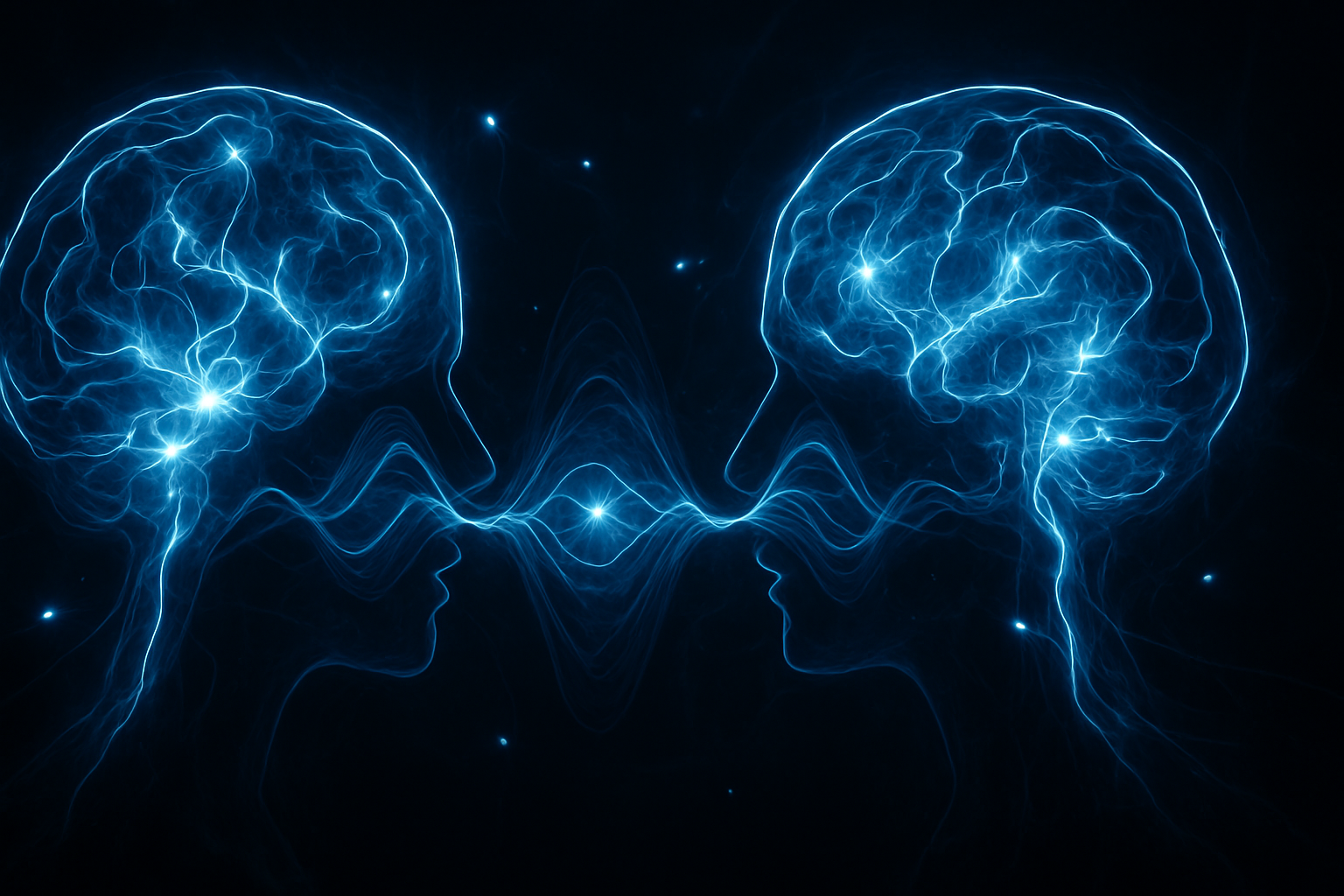
What if your thoughts are not confined to the three pounds of neural tissue inside your skull? What if consciousness — the very awareness reading these words right now — operates according to the same strange, borderless rules that govern subatomic particles? The intersection of quantum entanglement consciousness research is no longer a fringe conversation happening in metaphysical bookshops. It is unfolding in neuroscience laboratories, quantum biology departments, and theoretical physics papers that are quietly reshaping how science understands the mind's relationship to reality.
Quantum entanglement — the phenomenon Einstein famously dismissed as "spooky action at a distance" — describes a condition in which two particles, once connected, remain instantaneously correlated regardless of the physical distance separating them. Measure the spin of one particle, and its entangled partner responds instantaneously, even if it is on the other side of the galaxy. No signal travels between them. No time elapses. They simply know each other across space and time. Now, a growing chorus of researchers is asking a radical question: could human consciousness work the same way?
The Science That Refuses to Stay Quiet
For decades, conventional neuroscience treated consciousness as a byproduct of classical brain chemistry — neurons firing, synapses transmitting, electrochemical gradients rising and falling. But this model has always struggled to explain what philosopher David Chalmers called "the hard problem of consciousness": why does subjective experience exist at all? Why does processing information feel like something?
Enter the Orchestrated Objective Reduction (Orch-OR) theory, developed by physicist Roger Penrose and anesthesiologist Stuart Hameroff. Their controversial but increasingly cited framework proposes that quantum processes inside microtubules — protein structures within neurons — give rise to conscious experience. If quantum coherence can be sustained inside warm, wet biological tissue (a fact once considered impossible), then the brain may be doing something far more exotic than classical computation.
Supporting this possibility, a 2022 study published in Physics of Life Reviews by Hameroff and colleagues reported experimental evidence consistent with quantum vibrations in microtubules. Meanwhile, research into quantum biology has already demonstrated quantum coherence in photosynthesis, bird navigation, and enzyme catalysis — proving that biological systems can harness quantum effects in ways that feel almost intelligent.
"The day science begins to study non-physical phenomena, it will make more progress in one decade than in all the previous centuries of its existence." — Nikola Tesla
If consciousness arises partly from quantum processes, then the properties of quantum systems — including entanglement, superposition, and nonlocality — may apply to awareness itself. This is not science fiction. It is an active frontier of inquiry, and its implications for how we understand thought, intention, and reality are staggering.
Nonlocality of Mind: What the Research Suggests
The concept of quantum entanglement consciousness becomes especially compelling when we look at studies on distant mental influence. The Global Consciousness Project, a long-running experiment based at Princeton's former PEAR laboratory, has collected data from random event generators (REGs) placed around the world for over two decades. During events of massive collective human attention — the September 11 attacks, the death of Princess Diana, global meditations — the REGs show statistically significant deviations from randomness. The data suggests that coordinated human consciousness may create a measurable, nonlocal field effect.
Similarly, meta-analyses of remote viewing studies — many originally funded by the CIA's now-declassified Stargate Program — have shown results that exceed chance probability at odds of billions to one, according to a comprehensive analysis published by Dr. Jessica Utts, a statistician at the University of California. These findings don't prove consciousness is quantum. But they suggest that awareness may operate with a reach that classical neuroscience cannot account for.
Neuroscientist and author Dr. Joe Dispenza has compiled extensive anecdotal and biometric data from thousands of meditators showing coherent brainwave patterns that appear to influence outcomes beyond the individual body. When groups enter deep states of meditative coherence simultaneously, something measurable shifts — not just inside those brains, but in the collective energetic field around them.
Practical Techniques to Engage Your Nonlocal Consciousness
Understanding this science is powerful. Actually practicing with it is transformative. Here are concrete techniques you can begin immediately to work consciously with the principles underlying quantum entanglement consciousness:
- Coherent Heart-Brain Entrainment: Research from the HeartMath Institute shows that when your heart and brain enter a state of coherence — measurable via HRV (heart rate variability) — your electromagnetic field expands significantly. Spend five minutes each morning placing your hand on your heart, breathing slowly at a five-second inhale and five-second exhale rhythm, and generating a genuine feeling of gratitude or love. This coherent state may be the biological equivalent of "tuning" your quantum receiver.
- Focused Intention Setting in Theta State: The brain's theta frequency (4–8 Hz) corresponds to the hypnagogic state between waking and sleep — a state associated with heightened suggestibility, creative insight, and what many traditions call the gateway to the subconscious. Set your intentions in this liminal state each morning before fully waking, or induce it through deep meditation. In quantum terms, you may be collapsing probability waves toward specific outcomes while your cognitive filters are suspended.
- Nonlocal Compassion Meditation: Select someone — ideally someone you don't often think about — and spend ten minutes radiating genuine compassion toward them. Research from the Institute of Noetic Sciences suggests this practice can produce measurable physiological changes in the recipient. Whether through quantum entanglement or a field mechanism we have yet to characterize, directed compassion appears to travel.
- Sound as a Quantum Carrier Wave: Specific sound frequencies may help synchronize the quantum oscillations within neural microtubules. Binaural beats at theta and delta frequencies, along with Solfeggio tones, are increasingly studied for their capacity to shift brainwave states rapidly and reliably. Quantress users regularly report entering deep states of coherent awareness within minutes of engaging with precisely tuned harmonic frequencies — states that correlate with heightened intuition, synchronicity, and felt connection to something beyond the individual self.
Entanglement as a Model for Manifestation
Here is where quantum physics and ancient wisdom traditions converge most beautifully. In virtually every mystical tradition — from the Vedic concept of Indra's Net (in which every jewel reflects every other jewel infinitely) to the Hermetic axiom "as above, so below" — reality is described as fundamentally interconnected and responsive to consciousness. These were not metaphors. They may have been accurate descriptions of a quantum reality that human awareness directly participates in.
If particles can remain entangled across the universe, and if consciousness is partly a quantum phenomenon, then your awareness may already be entangled with aspects of reality you have not yet consciously accessed. Manifestation, from this perspective, is not magical thinking. It is the deliberate act of collapsing quantum probability fields through focused, coherent, emotionally charged observation — which is exactly what intention-setting practices train you to do.
Tools like Quantress leverage this principle by delivering harmonic sound environments specifically engineered to support the coherent brainwave states from which intention becomes most potent. When your brain is oscillating in coherent theta or gamma frequencies, the scientific evidence suggests your capacity to influence the quantum field around you is dramatically enhanced.
The physicist John Wheeler once proposed the "participatory universe" — the idea that the universe is not simply observed by consciousness but is, in some deep sense, brought into being by it. "We are not only observers," he wrote. "We are participators." If Wheeler was right, then every meditative session, every moment of genuine heart coherence, every focused intention you set is not a passive wish. It is an act of quantum authorship.
An Invitation to Experiment
The honest scientific answer to whether quantum entanglement consciousness is real is: we do not yet fully know. But the evidence is accumulating in directions that should excite every seeker who has ever felt that thought is more powerful than we are taught to believe. The data from consciousness research, quantum biology, and noetic science is consistently pointing toward a mind that is larger, more connected, and more causally potent than classical models allow.
You do not need to wait for scientific consensus to begin experimenting. Your own direct experience is data. Try the heart coherence practice for seven days. Set your intentions from theta state. Send compassion nonlocally. Bathe your nervous system in resonant sound. Observe what changes — not just inside you, but in the world that meets you.
The universe may be listening more carefully than you ever imagined. And your thoughts may be the very language it speaks.