Manifestation
Reticular Activating System and Manifestation: How Your Brain's Filter Decides Which Reality Signals Reach Your Conscious Mind
Quantress · March 26, 2026
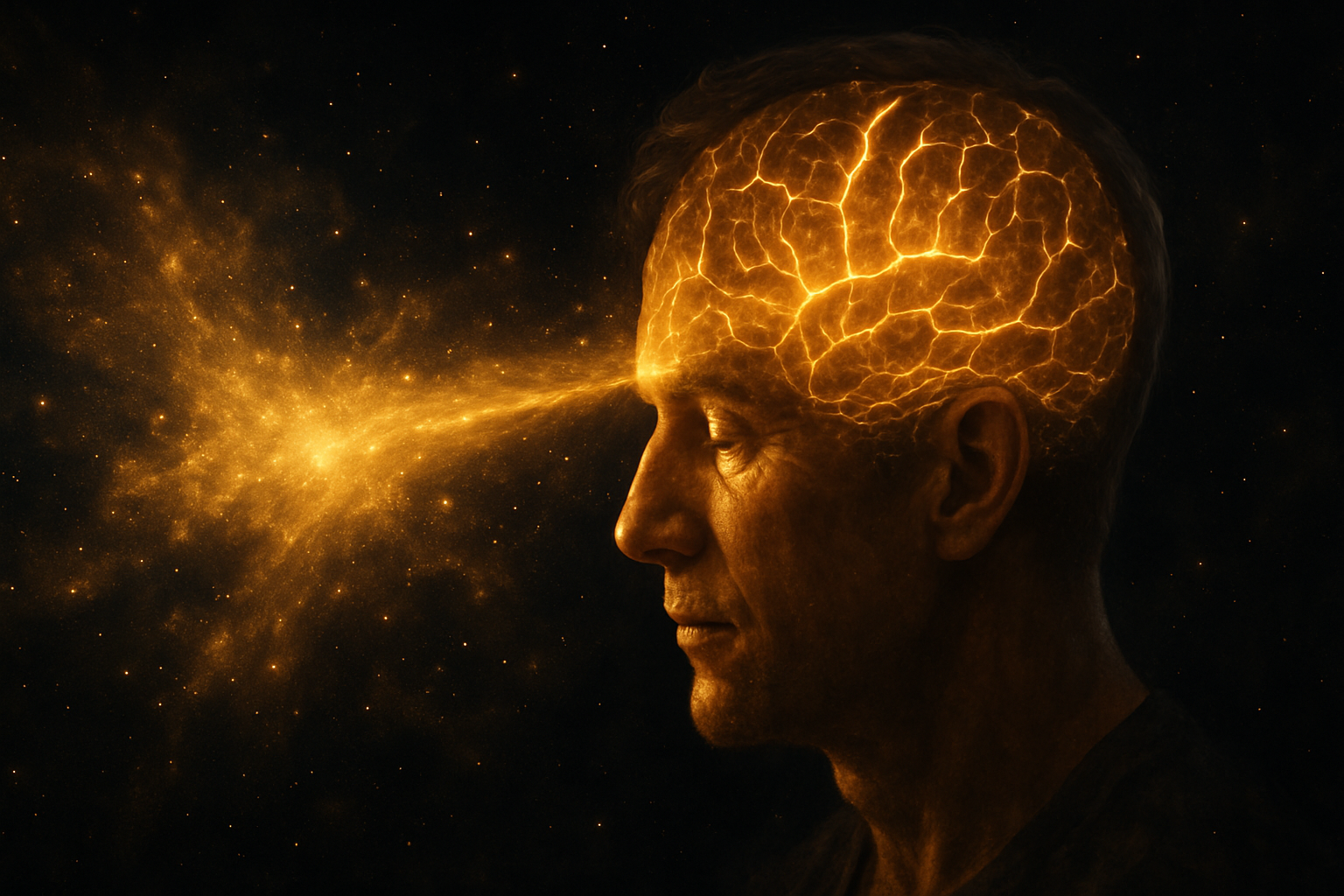
Deep inside your brainstem, a neural filter called the reticular activating system decides what you notice — and what you miss entirely. Understanding how this biological gatekeeper works may be the most practical neuroscience key to deliberate manifestation.
Every moment, your brain receives approximately 11 million bits of sensory information per second. Yet your conscious mind processes only about 40 to 50 bits of that flood. Somewhere between the universe's constant transmission and your awareness, a biological gatekeeper is making decisions — profound, reality-shaping decisions — about which signals deserve your attention. That gatekeeper is the reticular activating system, and understanding the relationship between the reticular activating system and manifestation may be the most scientifically grounded bridge between neuroscience and the ancient art of conscious creation.
The Brain's Cosmic Filter: What the RAS Actually Does
The reticular activating system (RAS) is a dense network of neurons located in the brainstem, spanning roughly the size of a little finger. Despite its modest dimensions, it governs arousal, wakefulness, and — most critically for our purposes — selective attention. It acts as a signal relay station, constantly scanning the environment and deciding which incoming data gets promoted to conscious awareness and which gets silently archived in the background hum of unconscious processing.
Think of the RAS as a highly trained editorial staff working in real time. Of the millions of data points arriving each second — photons striking your retina, air pressure variations hitting your eardrums, proprioceptive feedback from every joint in your body — your RAS selects the stories it deems relevant and forwards them to the prefrontal cortex for conscious consideration. Everything else? Filed away without your knowledge.
Research published in the Journal of Neuroscience has demonstrated that the RAS works in conjunction with the thalamus to gate sensory information based on prior learning, emotional significance, and anticipated relevance. In other words, your past experiences and current expectations literally program which reality you perceive. This is not metaphor. This is measurable, peer-reviewed biology.
You have almost certainly experienced this phenomenon without naming it. The day you decide to buy a red car, you suddenly see red cars everywhere. They were always there. The roads did not change. What changed was the filter — and that filter is your reticular activating system at work.
How Intention Reprograms the Filter
Here is where the conversation between the reticular activating system and manifestation becomes genuinely electrifying. If the RAS filters reality based on what it has been trained to consider relevant, then consciously programming it with new intentions is not mystical wishful thinking — it is a neuroscientific strategy for reshaping your experiential reality.
"The brain does not perceive reality as it is. It perceives reality as it expects it to be. Expectation is the lens, and attention is the light."
— Dr. Anil Seth, Professor of Cognitive and Computational Neuroscience, University of Sussex
When you hold a clear, emotionally charged intention — whether through meditation, visualization, affirmation, or sound-based practice — you are essentially sending a prioritization memo to your RAS. You are telling your brain's filter: "This pattern is relevant to my survival and flourishing. Elevate it to conscious awareness whenever it appears."
Studies on goal-directed attention published in Psychological Science confirm that clearly defined personal goals increase neural sensitivity to goal-relevant environmental cues. Participants who articulated specific intentions showed measurably faster recognition times for related stimuli — even when those stimuli were presented subliminally. Your intention is not just a thought. It is a biological instruction.
This is precisely why the ancient practice of setting intentions before meditation, prayer, or sound healing ceremonies has such durable cross-cultural staying power. Across traditions separated by continents and centuries, wisdom keepers understood intuitively what neuroscientists are now mapping in laboratory conditions: directed inner focus reshapes what appears in the outer world — not through magic, but through the precise recalibration of perception itself.
Sound, Frequency, and the RAS Activation Window
One of the most underexplored dimensions of the reticular activating system and manifestation practice involves the role of sound and vibrational frequency in modulating RAS activity. The RAS is exquisitely sensitive to auditory input — evolutionarily speaking, unexpected sounds in the environment are among the most ancient triggers for heightened alertness and attention.
Research in binaural beat entrainment — particularly studies emerging from institutions like the Monroe Institute and peer-reviewed work in Frontiers in Human Neuroscience — suggests that specific auditory frequencies can directly influence brainwave states in ways that make the RAS more receptive to new informational patterns. Theta-range frequencies (4–8 Hz), associated with deep meditation and hypnagogic states, appear to lower the habitual filtering thresholds of the RAS, creating a window of increased neural plasticity.
In practical terms: when you enter a theta state through deep meditation, rhythmic breathwork, or sound healing frequencies, your RAS becomes temporarily more permeable — more willing to accept and encode new patterns as relevant. This is the neurological basis for why intentions set in deep meditative states tend to produce more durable shifts in perception than those set during ordinary waking consciousness. You are programming the filter when the filter itself is most open to reprogramming.
Quantress users consistently report that pairing clear intention-setting with specific frequency sessions — particularly those using Solfeggio harmonics and theta entrainment — produces noticeably faster shifts in what they begin to notice and attract in daily life. What they are describing, through experiential language, is measurable RAS recalibration.
Practical Techniques to Consciously Program Your RAS
Understanding the science is only the beginning. Here are concrete, immediately actionable techniques to leverage the reticular activating system and manifestation practice in your daily life:
- Morning Intention Scripting: Within the first five minutes of waking — when you are naturally in a theta-alpha transitional state — write three specific intentions in present-tense, sensory-rich language. The vividness and emotional resonance of the language matters enormously. You are encoding relevance signals directly into a freshly primed RAS.
- Frequency-Primed Visualization: Before a visualization session, spend 10–15 minutes listening to theta binaural beats (ideally 5–7 Hz carrier frequency). Then, with your eyes closed, construct your intended reality in full sensory detail — sound, texture, emotion, color. You are inputting the pattern into a neurologically receptive filter.
- Evidence Journaling: Each evening, record three pieces of evidence — however small — that your intended reality is already present or moving toward you. This practice actively reinforces RAS confirmation pathways, training the filter to continue elevating related signals to consciousness. Neuroscientist Dr. Joe Dispenza's work on repetitive neural encoding supports this approach directly.
- Coherent Breathing with Affirmation: Use a 5-second inhale, 5-second exhale rhythm (associated with heart rate variability coherence in HeartMath Institute research) while slowly repeating a single core intention. Physiological coherence appears to enhance thalamo-cortical communication — essentially improving signal quality between your RAS and your conscious mind.
- Sound Anchor Programming: Choose a specific piece of music or tonal frequency that you associate exclusively with your intention. Play it during visualization, during evidence journaling, and during moments of inspired action. Over time, the sound itself becomes a neurological anchor that activates your intention-encoded RAS state on demand.
The Deeper Invitation
Perhaps the most profound implication of understanding the reticular activating system and manifestation is this: reality, as you experience it, has always been a collaboration. The universe transmits constantly, in every frequency and form. What you receive — what rises into the light of your awareness — has always been shaped by the invisible architecture of your beliefs, your traumas, your desires, and your expectations.
You have never been a passive observer of reality. You have always been, at the neural level, a participant in its construction. The only question is whether that participation has been conscious or unconscious.
The science of the RAS does not diminish the mystery of manifestation. If anything, it deepens it — because it reveals that the boundary between inner world and outer world has always been far more permeable than our materialist assumptions allowed. When the Hermetic tradition declared "as within, so without," it was articulating, in the language of its time, a principle that modern neuroscience is only now beginning to map with sufficient precision.
Start tonight. Choose one intention. Write it in vivid, present-tense language. Find a frequency that resonates with how it feels to already have it. Sit with that sound for fifteen minutes before sleep — when your RAS is naturally easing its grip and the deeper layers of mind become accessible. Then watch, with genuine scientific curiosity, what begins to appear in your field of awareness.
The filter is yours to program. The transmission has always been there, waiting for you to tune in.