Mind Power
Self-Concept Reprogramming: How Identity-Level Neural Restructuring Overrides Limiting Beliefs and Creates the Internal Architecture Required for Consistent Manifestation
Quantress · May 3, 2026
Manifestation stalls not at the level of technique but at the level of identity — and neuroscience now shows that self-concept is a malleable neural construct that can be systematically restructured through targeted reprogramming protocols. Shifting who you believe yourself to be at the subconscious level is the single most powerful leverage point for producing lasting external change.
There is a quiet war happening inside you — not between good and evil, but between who you are and who you believe yourself to be. Most manifestation practices fail not because the universe isn't listening, but because the signal being transmitted is scrambled at the source. That source is your self-concept: the deeply encoded neural architecture that silently governs every thought you think, every opportunity you recognize, and every reality you allow yourself to inhabit. Understanding self-concept reprogramming isn't just a spiritual exercise — it's a precise intervention at the neurological level, one that modern neuroscience is only beginning to map with the tools it deserves.
The Neural Blueprint Beneath Your Beliefs
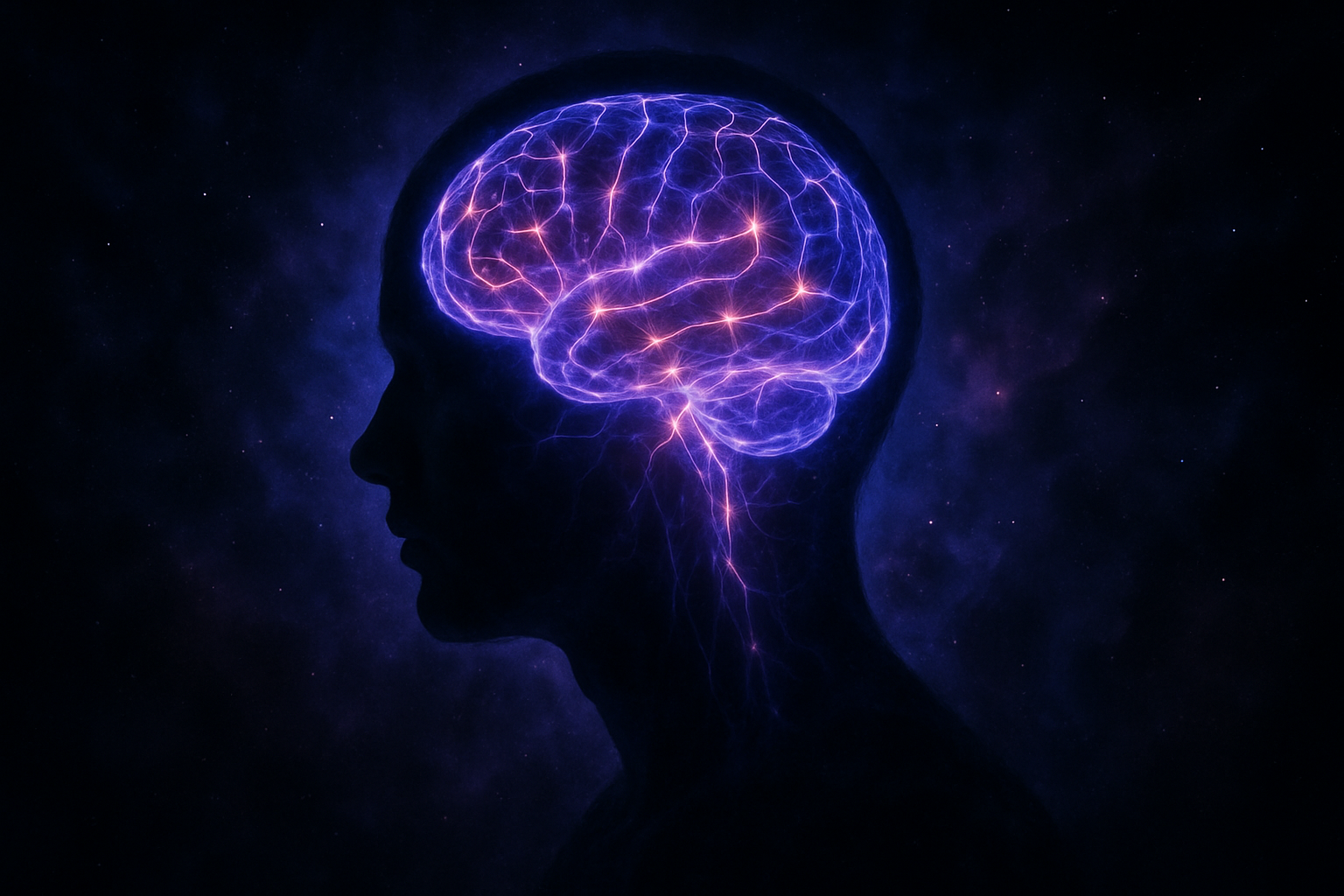
When neuroscientists talk about the "default mode network" (DMN), they're describing a constellation of brain regions — the medial prefrontal cortex, posterior cingulate cortex, and angular gyrus — that activate precisely when you're not focused on external tasks. This network is your brain's autobiographical engine. It is where your self-concept lives, hums, and perpetually rewrites itself. A landmark 2016 study published in NeuroImage demonstrated that the DMN shows remarkably consistent activation patterns when individuals engage in self-referential processing — meaning the brain has a dedicated architecture for the story it tells about who you are.
Here is what's revolutionary: this architecture is plastic. The principle of neuroplasticity — confirmed across decades of research by scientists like Michael Merzenich at UCSF — establishes that neural pathways are not fixed wiring but dynamic structures that reorganize in response to repeated experience, focused attention, and emotional intensity. Your limiting beliefs are not truths etched in stone. They are synaptic habits, firing patterns reinforced through repetition until they feel like bedrock. Self-concept reprogramming is the deliberate process of interrupting those patterns and installing new ones — not through wishful thinking, but through neurologically informed practice.
The quantum dimension enters here in a profound way. Theoretical frameworks in quantum biology, including the controversial but persistently compelling Orchestrated Objective Reduction (Orch-OR) hypothesis proposed by physicist Roger Penrose and anesthesiologist Stuart Hameroff, suggest that conscious observation may play a fundamental role in collapsing probability waves into experienced reality. Whether or not this fully maps onto manifestation mechanics, the principle resonates deeply: the observer — your self-concept — shapes what becomes real. Change the observer, and you change the observed.
Why Identity-Level Change Is the Only Change That Lasts
Most people attempt change at the level of behavior. They set goals, build habits, and push themselves toward new outcomes — all while maintaining an underlying self-narrative that quietly contradicts every effort. This is the fundamental design flaw in conventional self-help. You cannot sustainably inhabit a reality that doesn't match your internal identity structure. The subconscious mind, which processes an estimated 95% of cognitive activity according to neuroscientist Tor Nørretreng's research, will consistently act as a correction mechanism — pulling you back toward the reality that matches your encoded self-image.
"The mind is not a vessel to be filled, but a fire to be kindled — and the self is not a fixed object but a process, a verb, not a noun."
— Alan Watts, philosopher and interpreter of Eastern wisdom for the Western mind
Identity-level change means working beneath behavior and belief — directly with the felt sense of self. Psychologist Roy Baumeister's extensive research on self-concept clarity shows that individuals with a highly consistent, confidently held self-concept demonstrate greater psychological resilience, better decision-making, and — crucially — a stronger ability to act in alignment with their stated values and goals. From a manifestation perspective, this translates directly: when your identity is coherent and aligned with your desired reality, your choices, perceptions, and energetic outputs naturally conspire to produce that reality.
This is what Neville Goddard was pointing to decades before neuroscience had the vocabulary for it. His central teaching — "assume the feeling of the wish fulfilled" — is not mere positive thinking. It is an instruction to inhabit the identity of the person who already exists in the desired reality, not as performance, but as genuine neural restructuring through sustained imaginative practice. Modern research on mental simulation confirms his intuition: the brain's motor cortex activates nearly identically whether you physically perform an action or vividly imagine performing it, as documented in studies by Alvaro Pascual-Leone at Harvard Medical School.
Practical Techniques for Self-Concept Reprogramming
The following techniques are not abstract philosophy. Each one targets specific mechanisms of neural change and can be implemented beginning today.
- Identity Journaling with Temporal Bridging: Rather than journaling about your current circumstances, write exclusively from the perspective of your future self — the version of you who already lives in your desired reality. Use present tense. Describe your internal experience: how you feel waking up, how you make decisions, how you relate to others. This practice activates the DMN's self-referential processing circuits and begins associating "you" with the new identity. Do this for 10 minutes each morning for 21 consecutive days to leverage the neural consolidation window.
- Somatic Anchoring: Beliefs are not just cognitive — they are held in the body. Research in embodied cognition by psychologist Amy Cuddy and others shows that physical posture and movement directly influence hormonal profiles and self-perception. Identify the physical sensation of your desired self-concept (expansiveness in the chest, groundedness in the legs, ease in the shoulders) and anchor it with a specific gesture. Repeat this anchor multiple times daily until the embodied feeling becomes the new baseline.
- Subconscious Imprinting Through Theta State Access: The theta brainwave state (4–8 Hz), occurring naturally in the hypnagogic window between waking and sleep, is characterized by dramatically increased neuroplasticity and reduced critical-factor interference. This is your most direct access point to the subconscious architecture. In the final minutes before sleep, hold a simple, emotionally resonant statement of your new identity — not an affirmation, but a declaration: "I am someone who..." Let it settle into the body as felt truth rather than spoken words.
- Contradiction Interruption Protocol: Every time you notice yourself about to complete an old identity narrative ("I'm not the kind of person who..."), pause, breathe, and consciously reroute: "That used to be true. Now I am..." This interrupts the synaptic habit loop and creates a micro-moment of neural rewiring. Neuroscientist Donald Hebb's foundational principle — "neurons that fire together, wire together" — works in both directions: disrupt old patterns consistently and they lose their structural dominance.
The Architecture of Consistent Manifestation
Manifestation is not magic performed upon an indifferent universe. It is the natural output of a coherent system — a self-concept so internally consistent that it generates aligned thought, aligned action, aligned perception, and aligned energetic resonance simultaneously. When these four streams converge, what appears to be miraculous becomes almost mechanical in its reliability.
The reason most people experience manifestation as inconsistent is not a failure of desire or belief in isolation — it is a failure of identity coherence. They want something with one part of themselves while another part holds a contradictory story. This internal dissonance creates what consciousness researchers sometimes call "signal interference" — the quantum coherence of intentional thought is disrupted before it can collapse into material reality.
Quantress users who combine sound healing frequencies — particularly theta-wave entrainment and the 528 Hz DNA repair frequency — with active self-concept reprogramming protocols report significantly accelerated results. This makes neurological sense: sound frequencies that entrain the brain to theta states reduce the critical filter resistance that normally blocks subconscious identity updating, creating a fertile window for the identity-level interventions described above.
The internal architecture required for consistent manifestation is not complex, but it demands honesty. It requires you to locate the specific self-narrative that contradicts your desired reality, to understand it not as truth but as trained pattern, and to systematically replace it — not with forced positivity, but with a new identity that you genuinely, somatically, neurologically inhabit.
Begin the Restructuring Now
The most important insight to carry forward is this: you are not trying to convince yourself of something false. You are remembering something true — a version of yourself that exists as potential right now, waiting only for your consistent internal recognition to become fully expressed in the material world. Self-concept reprogramming is not self-deception. It is the precise, scientifically supported, spiritually resonant practice of becoming a more accurate witness to your own unlimited nature.
Start tonight. In the theta window before sleep, let yourself feel — not think, feel — the truth of who you are becoming. Tomorrow morning, write three paragraphs from that person's perspective. Let the body remember the posture of that identity. Interrupt one old story. Repeat. The neural architecture will follow the attention. The reality will follow the architecture. This is not a metaphor. This is how consciousness builds worlds.