Mind Power
Visualization and Neuroplasticity: How Mental Rehearsal Activates the Same Neural Circuits as Physical Experience and Accelerates Desired Reality Formation
Quantress · April 25, 2026
Mental rehearsal is not metaphor — neuroscience confirms that vivid visualization fires the same cortical pathways as lived experience, physically reshaping the brain toward intended outcomes. This article unpacks the neural mechanics behind visualization and provides a structured mental rehearsal protocol for accelerating subconscious alignment.
What if the line between imagination and reality is far thinner than we were ever taught? Modern neuroscience is revealing something that mystics have whispered for millennia: the brain, in many measurable ways, cannot distinguish between a vividly imagined experience and one that physically occurs. This discovery sits at the electrifying intersection of visualization and neuroplasticity — and it may be one of the most practically transformative insights available to anyone serious about shaping their inner and outer world.
This isn't metaphor. This is measurable, peer-reviewed, electrode-confirmed neuroscience. And when you understand the mechanism beneath it, your relationship to your own mind — and to what you call "reality" — will never be quite the same.
The Brain That Cannot Tell the Difference
In a landmark study conducted at Harvard University, neuroscientist Alvaro Pascual-Leone divided participants into three groups. One group physically practiced a simple piano sequence for five days. A second group only imagined playing the sequence with the same regularity and mental precision — no fingers touched any keys. A third group did nothing. When brain scans were taken, the motor cortex maps of the mental rehearsal group had expanded almost identically to those who had physically practiced. The neural circuitry had reorganized — grown, thickened, and strengthened — based purely on thought.
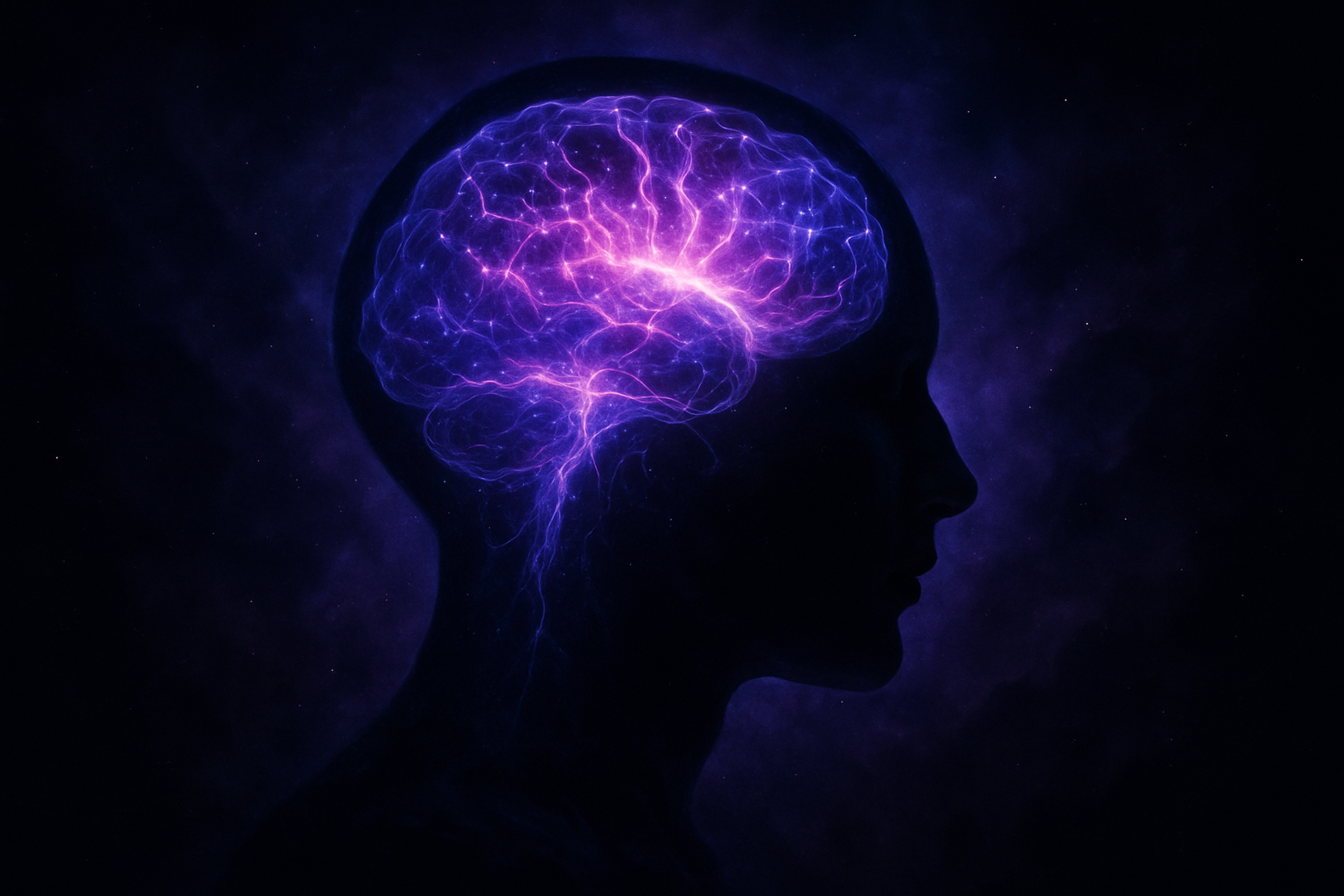
This is the foundation of what researchers now call mental rehearsal, and it is inseparable from the science of neuroplasticity — the brain's documented capacity to rewire itself in response to experience, thought, and intention. What makes the relationship between visualization and neuroplasticity so profound is this: the brain encodes imagined experiences into the same neural architecture it uses for lived ones. Every time you hold a vivid mental image with emotional intensity, you are quite literally sculpting your nervous system.
Neuroscientist and author Dr. Joe Dispenza, drawing on work in quantum biology and functional MRI research, has described this phenomenon as the brain "firing in the future." When you mentally rehearse a desired state — a healed body, an abundant life, a confident self — your neurons begin forming the synaptic pathways associated with that state before it has occurred in consensus reality. The brain, operating as a frequency-sensitive instrument, starts becoming the version of you that you are imagining.
Neuroplasticity as the Mechanism of Manifestation
Here is where neuroscience begins to sound strikingly like ancient spiritual teaching. In the Hermetic tradition, it was said: "As within, so without." In quantum physics, the observer effect demonstrates that the act of observation influences the behavior of matter at the subatomic level. Visualization, understood through the lens of neuroplasticity, bridges these frameworks in a startlingly concrete way.
When you consistently hold a mental image — particularly during states of deep relaxation or meditation, when theta and alpha brainwave activity dominate — you are doing several neurologically significant things simultaneously:
- Activating the reticular activating system (RAS): This brainstem network acts as a biological filter, directing your conscious attention toward stimuli that match your dominant mental patterns. Visualization literally trains your brain to notice opportunities, people, and circumstances aligned with your imagined reality.
- Releasing coherent neurochemistry: Vivid, emotionally charged visualization triggers the release of dopamine, serotonin, and even oxytocin — the same neurochemicals released during actual positive experiences. Your body begins to live in the biochemical signature of your desired state.
- Strengthening new synaptic pathways: Repeated visualization prunes old, fear-based or scarcity-based neural networks and reinforces new ones associated with your intended reality — a process neuroscientists call synaptic pruning and long-term potentiation.
- Entraining the default mode network: The brain's default mode network, active during rest and self-referential thought, begins to encode your visualized identity as the baseline "self-model" — shifting your subconscious sense of who you are and what is possible.
This is not passive daydreaming. This is deliberate neurological engineering.
"The act of imagining fires the same neurons as the act of doing. To the nervous system, a richly imagined event and a real one are written in the same biological ink."
— Dr. Richie Davidson, Neuroscientist, University of Wisconsin-Madison
The Quantum Layer: Consciousness as a Field-Shaping Force
To go deeper than classical neuroscience, we must consider what quantum biology and consciousness research are beginning to suggest. Studies at the Princeton Engineering Anomalies Research (PEAR) laboratory documented statistically significant correlations between focused human intention and measurable deviations in random event generators — suggesting that consciousness, particularly when coherent and directed, may interact with physical systems beyond the brain itself.
If the brain is not merely a computing machine but a quantum-sensitive transceiver — capable of both emitting and receiving coherent fields of information — then visualization becomes something far more expansive than internal mental rehearsal. It becomes an act of harmonic resonance with the field of potential that quantum physicists describe as the zero-point field, and that spiritual traditions have called the Akashic field, the unified field, or simply Source.
The science of visualization and neuroplasticity thus opens into a larger mystery: that by reshaping the internal field of the brain, we may simultaneously be broadcasting a coherent signal into the quantum field that underlies physical reality. The desired experience is not merely attracted — it is in some sense encoded into the probabilistic structure of what comes next.
This is precisely why the quality of visualization matters as much as the quantity. Frequency without coherence produces noise. But a visualization practice anchored in genuine emotional resonance — felt as already real, saturated with sensory detail — generates the kind of coherent neurological signal that both reshapes the brain and, if the quantum researchers are right, nudges the field.
A Practical Protocol: The Immersive Visualization Method
Understanding the neuroscience is only valuable if it translates into practice. Here is a structured technique you can begin tonight, designed to activate the principles of visualization and neuroplasticity at their deepest level:
- Enter the threshold state first: Spend 5–10 minutes in slow, coherent breathing — inhale for 5 counts, exhale for 5. This shifts your brainwaves toward alpha and theta, the states where neuroplastic change is most accessible and the RAS is most receptive to reprogramming.
- Construct the scene with all five senses: Don't merely see your desired reality — hear it, feel the textures, smell the environment, taste the moment. The more sensory channels engaged, the broader the neural activation and the stronger the encoding.
- Feel it as memory, not fantasy: This is the critical distinction. Instead of reaching toward a future you want, practice the subtle internal shift of remembering it — as though it has already occurred and you are reviewing a cherished experience. This activates different neural circuits than future-oriented longing, specifically those associated with certainty and embodied knowing.
- Anchor with gratitude: Close each session with 60–90 seconds of genuine gratitude for the experience as though it is real. Gratitude releases coherent heart-field frequencies that amplify neural encoding, as documented in HeartMath Institute research on heart-brain coherence.
- Repeat at sleep and wake thresholds: The hypnagogic state (drifting into sleep) and hypnopompic state (emerging from sleep) are periods of elevated neuroplastic receptivity. These are ideal windows for your visualization practice.
Quantress users who combine this immersive visualization protocol with Solfeggio-tuned sound frequencies report accelerated shifts in both subjective experience and measurable life outcomes — consistent with the understanding that sound and intention together create a more coherent neurological and energetic signal than either alone.
The Invitation: Become the Experiment
The most profound thing about the science of visualization and neuroplasticity is that it democratizes transformation. You do not need extraordinary willpower, rare genetics, or decades of disciplined practice. You need precision, consistency, and the willingness to treat your mind as the laboratory it genuinely is.
Every morning you wake up, you are presented with the same fundamental choice that quantum mechanics, neuroscience, and every wisdom tradition have pointed toward in their own language: will you observe and react to the reality already formed — or will you consciously participate in the formation of what comes next?
The neurons are waiting. The field is listening. Begin your practice tonight, hold it with the emotional depth of someone who already knows how the story ends — and watch the architecture of your experience begin, quietly and inexorably, to rearrange itself around the coherent signal you are broadcasting from the inside out.