Mind Power
Flow State Neuroscience: How Transient Hypofrontality, Brainwave Shifts, and Neurochemistry Dissolve the Ego and Amplify Performance
Quantress · September 16, 2026
Flow state is not a metaphor — it is a measurable neurological event involving suppressed prefrontal activity, surging neurochemicals, and synchronized brainwaves that collapse the boundary between self and action. Understanding the science behind it reveals why flow feels effortless and how to engineer the conditions that trigger it reliably.
You have sat down to work, opened the right tab, set the timer, and still found yourself twenty minutes later reading something completely unrelated while a low-grade anxiety hums underneath everything. The meditation app helped for a week. The affirmations felt hollow after day three. The breathwork gave you a pleasant calm that evaporated the moment your inbox reloaded. What you actually want is the state you have touched maybe a handful of times in your life: the one where time compresses, effort disappears, and the output arriving through your hands feels like it belongs to someone far more capable than the version of you who usually shows up. That state is not mystical. It is a precise neurobiological event, and flow state neuroscience now maps it well enough that you can learn to enter it deliberately. The cost of not learning this is not just one lost afternoon. It is the compounding loss of thousands of hours spent fighting your own nervous system, years of potential clarity that never crystallized into anything you can point to. The mechanism is real, the entry points are learnable, and some of them take under ten minutes to activate.
The Neuroscience of Flow: What Is Actually Happening Inside the Skull
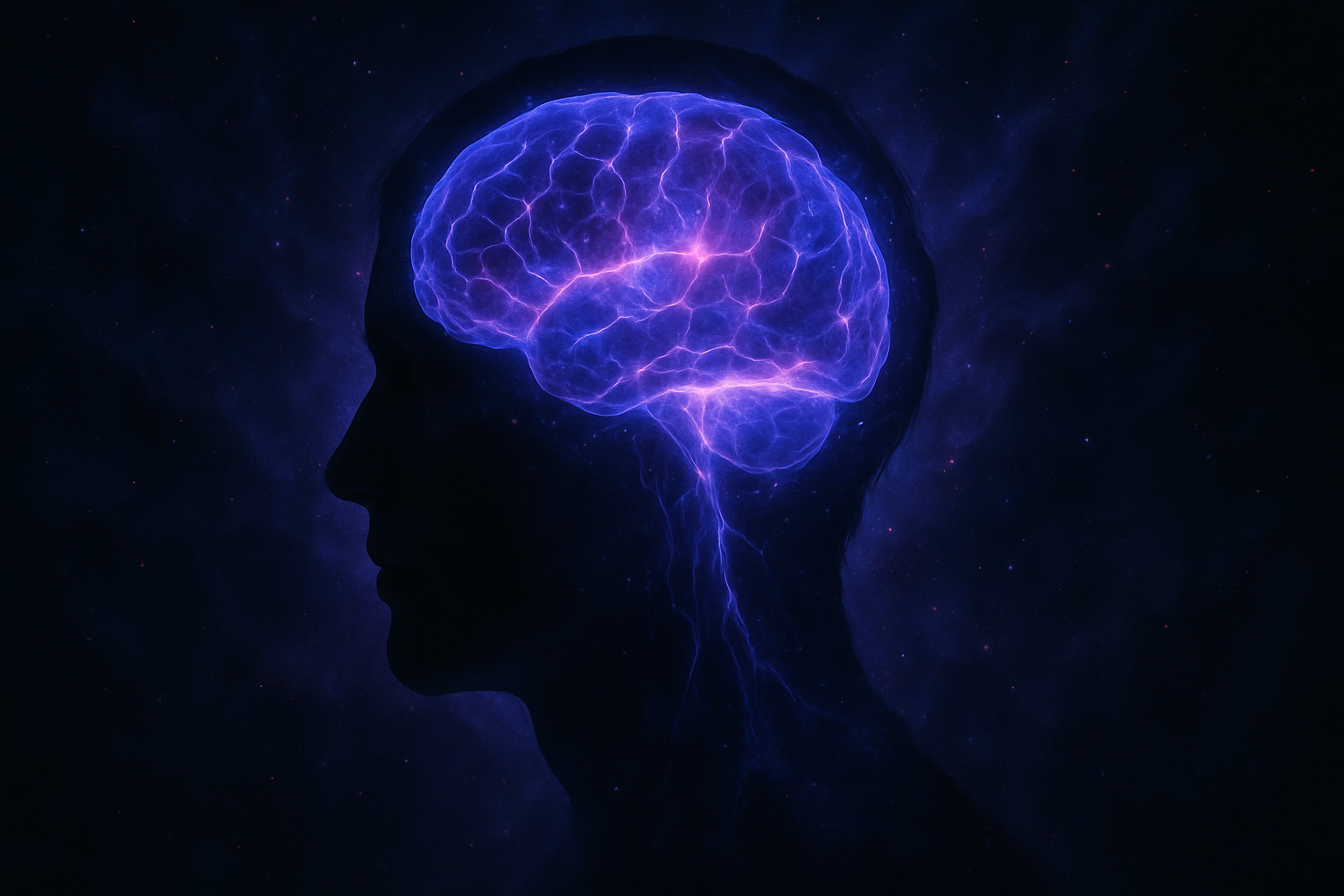
The foundational discovery underpinning flow state neuroscience is called transient hypofrontality, a term introduced by neuroscientist Arne Dietrich in a landmark 2003 paper in the journal Consciousness and Cognition. The prefrontal cortex, the region responsible for self-monitoring, self-criticism, time perception, and the continuous narrative of "me," temporarily reduces its metabolic activity during intense, skilled performance. It does not switch off. It quiets enough that the self-referential chatter it generates stops competing with the task at hand.
This is not a metaphor. Functional neuroimaging studies show measurable decreases in prefrontal activation during activities that produce self-reported flow, including improvised musical performance, expert gaming, and extreme sports. When the inner critic goes metabolically offline, the brain regions governing pattern recognition, procedural memory, and sensorimotor integration can operate without interruption. The experience of effortlessness is not the absence of effort. It is the absence of the neural overhead that normally taxes every action with evaluation and doubt.
Alongside hypofrontality, a specific brainwave architecture emerges. High-amplitude alpha oscillations in the 8-12Hz range dominate the resting zones of the cortex, creating a relaxed yet receptive baseline. Theta waves in the 4-8Hz band surge in regions linked to memory consolidation and creative association. In peak moments of flow, these lower-frequency states are punctuated by bursts of gamma-range neural synchrony above 30Hz, the signature of information binding across widely separated brain regions. The brain is simultaneously open and precisely coordinated, a combination almost impossible to engineer consciously through willpower alone.
The Neurochemical Cocktail That Makes Flow Feel Like a Different Reality
The subjective qualities of flow, the sense of merging with the task, the distortion of time, the intrinsic reward that makes hours feel like minutes, are not poetic descriptions. They correspond to measurable neurochemical releases. Dopamine rises, sharpening signal-to-noise ratios in neural circuits and reinforcing sustained attention. Norepinephrine increases arousal and narrows attentional focus. Anandamide, an endogenous cannabinoid, facilitates lateral thinking by weakening inhibitory connections between disparate neural networks. Serotonin stabilizes mood and reduces threat-sensitivity. Endorphins reduce the perception of physical and cognitive effort.
Researcher Steven Kotler, who has synthesized much of the peer-reviewed literature for the Flow Research Collective, identifies this as a "neurochemical cascade" rather than a single trigger. No one molecule produces flow. What produces it is a sequence: initial heightened arousal driven by a challenge that sits just beyond current skill, followed by the hypofrontal quieting that allows the neurochemical environment to stabilize into sustained performance. This is why boredom and anxiety are equally effective at blocking flow. Boredom provides insufficient dopamine drive. Anxiety keeps prefrontal self-monitoring activated, preventing the hypofrontal transition entirely.
The relationship between this state and identity dissolution connects to deeper questions about consciousness. Neuroscientists Stuart Hameroff and Roger Penrose have proposed that coherent quantum processes in microtubules within neurons may contribute to moments of unified, non-local awareness. While this remains contested, it points toward why the brain's deeper structures appear involved in the most profound flow experiences, not only cortical networks.
"The ego is a very good servant but a very poor master. In flow, the servant steps aside, and something more essential takes the wheel."
Paraphrased from the research synthesis of Mihaly Csikszentmihalyi, whose foundational work on optimal experience established the psychological architecture of flow.
The Practice: How to Engineer the Conditions That Let Flow Arrive
The critical insight from flow state neuroscience is that you cannot force flow, but you can remove the obstacles that prevent it and install the conditions that invite it. Three levers matter most.
Challenge-skill calibration. The task must sit approximately 4 percent beyond your current demonstrated ability, according to research frameworks Kotler draws from Csikszentmihalyi's original datasets. Too easy, and the dopaminergic drive fails to ignite. Too difficult, and the threat response locks the prefrontal cortex into hypervigilance. Before you begin any session, identify the specific micro-challenge you are solving, not the project, the next one decision.
Clear proximal goals. The brain cannot enter hypofrontality when it is navigating ambiguity. Ambiguity forces executive function to stay online. Write one sentence stating exactly what done looks like for the next 45 minutes. This closes the planning loop, freeing attentional resources from futures-thinking.
Neuroacoustic priming. The brainwave shifts associated with flow, specifically the alpha-theta crossover that precedes deep absorption, can be seeded acoustically. Alpha-range entrainment frequencies in the 8-12Hz band, delivered through binaural or isochronic audio, nudge cortical rhythms toward the receptive baseline from which flow can emerge. This is not a shortcut. It is a primer that reduces the time required to reach the threshold state. Related states like the hypnagogic window between waking and sleep share several of these same neuroacoustic signatures, which is why the period just before sleep is so often described as creatively fertile.
Eliminating the default mode network's interference. The default mode network activates during self-referential thought and future-projection, exactly the mental activity that competes with present-moment absorption. Physical movement for five to ten minutes before a focused session, particularly rhythmic movement like walking, has been shown to suppress default mode activity and prepare the neural terrain for task-positive network dominance.
Common Mistakes That Block Entry and Keep the State Shallow
Most people who have tried to engineer flow make one or more of the following errors.
- Skipping the warm-up. Flow rarely arrives in the first fifteen minutes. Research on expert performers consistently shows a ramp-up period, during which arousal builds and hypofrontality gradually sets in. Stopping at the twelve-minute mark because nothing feels different yet is the single most common reason people conclude that flow techniques do not work for them.
- Multitasking the entry phase. The prefrontal cortex cannot begin the metabolic quieting process while switching between tasks. One task, closed notifications, and a physical barrier to interruption are not productivity theater. They are neurobiological requirements.
- Neglecting recovery cycles. Flow depletes neurochemical resources. Sessions longer than 90-120 minutes without recovery reduce the neurochemical pool available for the next session. Respecting ultradian rest cycles preserves the capacity to re-enter flow repeatedly. Practices that support consistent neural restructuring over time make the entry threshold progressively lower.
- Treating arousal as the enemy. Pre-task anxiety is not a sign that flow will be unavailable. It is the first stage of the arousal curve. Reappraising anxiety as productive activation, a technique supported by research from psychologist Alison Wood Brooks, has been shown to improve both performance and reported absorption.
Try This in the Next 10 Minutes
- Write one sentence defining exactly what "done" looks like for your next work block. Be specific enough that you would know within 30 seconds whether you had achieved it.
- Put on headphones and play a binaural or isochronic alpha-range audio track (8-10Hz carrier frequency). Free options exist on most audio platforms. The signal requires headphones to function for binaural formats.
- Walk in place or take a three-to-five minute brisk walk, indoors or outdoors, before sitting down. This is not optional warm-up. It is default mode suppression.
- Set a visible timer for 25 minutes. Close every browser tab except the one you need. Put your phone in a different room or face-down out of reach.
- Begin the task while the audio continues. Do not evaluate quality for the first ten minutes. Output without assessment. The prefrontal quieting requires that you give it no reason to stay online.
- At the 25-minute mark, take a genuine two-to-three minute rest without screens before deciding whether to continue. Notice whether the state has deepened. It usually has.
Quantress encodes alpha-theta entrainment sequences, challenge-calibrated session structures, and the specific neuroacoustic primers described above into archetype-specific audio sessions, so you do not have to assemble the frequency layers, timing curves, and arousal ramps by hand each time. The sessions are designed to reduce the ramp-up period and extend the depth of absorption without requiring any prior experience with brainwave entrainment.
The version of you that works with full absorption for two focused hours accomplishes more than the fragmented version working eight distracted ones, and carries less cortisol into the evening, sleeps more deeply, and compounds that clarity across every day that follows. Flow state neuroscience does not promise a personality transformation. It delivers a repeatable neurological event that you can learn to access with the same reliability as any other trained skill, starting with the next session you sit down for.