Mind Power
Pineal Gland Activation: What Neuroscience and Ancient Traditions Reveal About the Brain's Gateway to Higher Consciousness
Quantress · September 1, 2026
The pineal gland has been called the seat of the soul for millennia — and modern neuroscience is beginning to explain why. This article examines what researchers have found about melatonin, DMT production, and calcification reversal in the context of expanded awareness and manifestation.
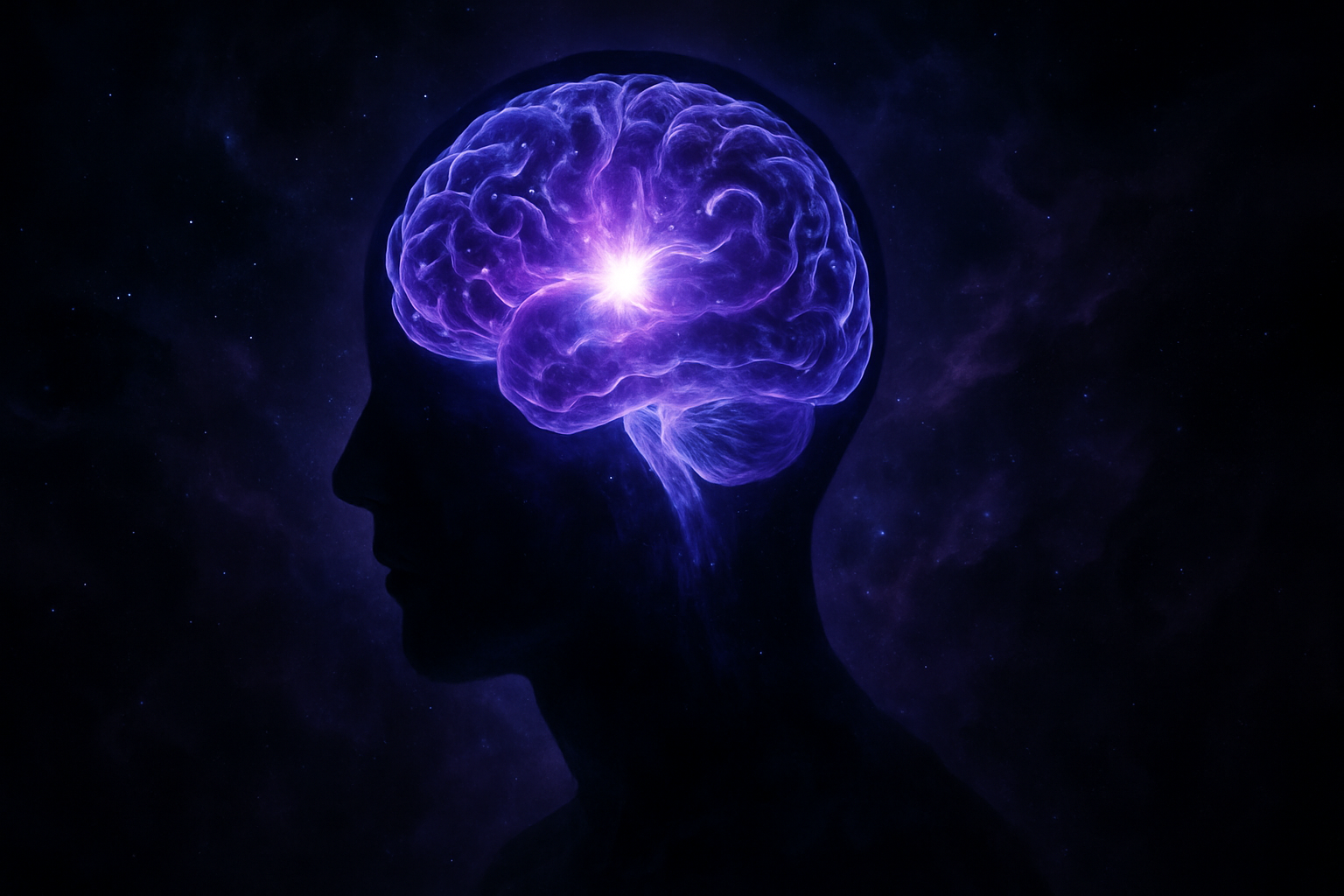
You have probably spent months cycling through meditation apps, breathwork routines, and affirmation stacks, getting occasional glimpses of clarity before the noise floods back in. The frustration is not that these tools are useless. It is that they operate at the surface level, touching mood and attention briefly without reaching the deeper physiological switch that makes altered states stick. That switch, increasingly discussed at the intersection of neuroscience and ancient contemplative systems, sits inside a rice-grain-sized gland at the geometric center of your brain. Pineal gland activation is not a metaphor. It refers to measurable shifts in how this gland produces, releases, and times specific neurochemicals that regulate sleep architecture, circadian coherence, and the deep trance states ancient traditions called higher consciousness. Without it, you are essentially trying to tune a radio that still has its antenna folded. Years of compounding cognitive clarity, sounder sleep, and the kind of focused intentionality that actually reshapes behavior are available once you understand how the brain's quantum antenna functions and what it needs from you.
The Mechanism: What the Pineal Gland Actually Does
The pineal gland is a photosensitive neuroendocrine organ. It receives indirect light signals from the retina via the suprachiasmatic nucleus, and it responds to darkness by converting serotonin into melatonin through a well-mapped enzymatic pathway involving arylalkylamine N-acetyltransferase (AANAT). That much is textbook. What is less commonly discussed is the range of other compounds the gland appears to synthesize under certain conditions.
Researcher Rick Strassman's clinical work at the University of New Mexico in the 1990s documented endogenous DMT (N,N-dimethyltryptamine) in human cerebrospinal fluid and proposed the pineal as a production site, a hypothesis that remains contested but biologically plausible given the gland's tryptamine-processing enzymes. More recently, a 2019 study by Jon Dean and colleagues at the University of Michigan confirmed DMT biosynthesis in the rat pineal gland and cortex, lending credibility to the idea that under specific neurochemical conditions, the gland participates in generating the substrates for non-ordinary states.
Separately, work on pineal calcification, which affects an estimated 40 percent of adults by age 40 according to imaging studies, suggests that fluoride accumulation, chronic light exposure at night, and oxidative stress reduce glandular sensitivity. This matters practically: if the gland is less responsive to darkness and circadian signals, melatonin timing is disrupted, which cascades into degraded sleep staging, reduced slow-wave repair, and a blunted hormonal environment for the kind of neuroplasticity that physically encodes desired cognitive patterns.
The Science Behind Pineal Gland Activation
The bridge between ancient activation practices and modern neuroscience runs through brainwave entrainment and electromagnetic coherence. When contemplative traditions prescribed darkness retreats, specific drumming tempos, or chanting at particular intervals, they were unknowingly engineering brainwave states that correlate with pineal activity.
"Coherence in neural oscillations is not merely a byproduct of cognition. It may be the substrate through which consciousness organizes information across distributed brain regions." -- Stuart Hameroff, MD, Director, Center for Consciousness Studies, University of Arizona
Hameroff's orchestrated objective reduction (Orch OR) model, developed with physicist Roger Penrose, positions quantum-level processes inside microtubules as central to conscious experience. While the full model is still debated, the underlying observation, that consciousness involves coordinated oscillatory activity across the brain, is well-supported. The pineal gland, sitting in the thalamic region at the convergence of left and right hemispheric communication, is anatomically positioned to participate in precisely this kind of whole-brain coherence.
Research from the HeartMath Institute, led by Rollin McCraty, has shown that coherent heart rhythm variability correlates with synchronized neural activity in prefrontal and limbic structures. When subjects enter heart coherence states deliberately, EEG recordings show increases in the 8 to 12Hz alpha range that is associated with relaxed, integrative awareness. Alpha is the gateway state. Cross the alpha threshold into the 4 to 8Hz theta band, and you enter the zone where the pineal gland appears most active in its melatonin and possibly tryptamine output, based on the correlation between deep meditation-induced states and endogenous neurochemical profiles documented in long-term meditators.
Darkness itself is a trigger. Even with eyes closed, ambient light leaking through eyelids suppresses AANAT activity. Studies using complete darkness protocols, similar to what is now called a "dark retreat," show melatonin spikes of three to five times baseline within 48 to 72 hours. Ancient Egyptian temple initiations, Tibetan dark retreats (yangti), and Indigenous vision practices all exploited this mechanism without naming it biochemically. The sleep-onset hypnagogic window, that liminal edge between waking and dreaming, is precisely the moment when melatonin is peaking and theta activity dominates. This is when the brain is most permeable to deep reprogramming.
The Practice: How to Support Pineal Function Without Overcomplicating It
Most protocols you will find online load unnecessary complexity onto a relatively simple physiological process. Skip the elaborate crystal grids, the hour-long guided visualizations, and the stacked supplement regimens. The four levers with the clearest mechanistic support are: darkness, breath-paced heart coherence, specific sound frequencies, and timing your practice at the natural melatonin onset window (roughly 60 to 90 minutes before your normal sleep time, or immediately upon waking before light exposure).
Sound deserves special mention. Binaural beats presented at a carrier frequency around 40Hz with a 6Hz beat differential have been shown in EEG studies to nudge cortical activity toward the theta range while maintaining enough arousal to avoid sleep onset. This matters because passive sleep does not produce the same intentional depth that a held theta state does. Gamma-range neural synchrony layered above a theta base appears in advanced meditators, suggesting that the optimal state for pineal gland activation is not purely passive but involves a kind of alert receptivity.
Breath work that extends the exhale to roughly twice the inhale length activates the parasympathetic branch of the autonomic nervous system and measurably increases heart rate variability coherence within three to five minutes. This reduces cortisol, which is directly antagonistic to AANAT activity, and creates the low-arousal, high-coherence neurochemical environment the pineal responds to. The default mode network, which is active during self-referential thinking and tends to dominate unfocused minds, quiets substantially under this combined breath-plus-sound protocol, creating the mental silence that practitioners across traditions describe as the precondition for deeper experience.
Common Mistakes That Stall Progress
The single most common error is practicing during peak light exposure, particularly in the morning with screens active. Morning is appropriate for alertness-oriented practice, not pineal-oriented work. Save structured pineal sessions for the pre-sleep window or, if mornings are your only option, ensure you practice before any screen or bright light exposure and use a sleep mask.
The second error is inconsistency. Circadian biology runs on regularity. A melatonin rhythm disrupted by irregular sleep timing, shift work, or late-night light cannot produce the consistent neurochemical baseline that sustained practice physically encodes in the brain. Seven minutes of consistent practice at the same time each night outperforms an inconsistent 45-minute session.
Third: treating pineal activation as a standalone event rather than an ongoing calibration. This is not a single switch. It is a rhythm you train, the same way cardiovascular fitness requires repeated stimulus, not one long run.
Try This in the Next 10 Minutes
- Reduce light to near-zero. Close blinds, turn off overhead lighting, and put your phone face-down. If you have a sleep mask, use it. Give your retina one full minute to adjust.
- Set a breath ratio of 4 counts in, 8 counts out. Do this for three minutes without audio. Notice the physical sensation of your exhale lengthening. This is your parasympathetic brake activating.
- Put on headphones and play a theta binaural beat track (search for "6Hz binaural beats" on any audio platform). Keep the volume low enough to hear your breath over it.
- With eyes closed and the mask on, direct your visual attention toward the center of your forehead, slightly behind the bridge of your nose. Do not strain. Simply hold a soft internal gaze at that location for five minutes while maintaining the extended exhale rhythm.
- Notice any phosphene activity, geometric patterns or shifting light behind closed eyes. This is not imagination. It reflects retinal and neural activity changes consistent with the shift in arousal state. Do not chase the visuals. Remain the observer.
- After the session, stay off screens for at least 20 minutes. This window is when the neurochemical shift consolidates and light exposure is most disruptive to what you just initiated.
Quantress sessions are built around exactly this protocol sequence, encoding theta-targeting binaural layers with cardiac coherence-paced rhythm guides so you do not have to assemble the audio architecture by hand or monitor your breath counts consciously. The result is that the technique above, which takes effort the first few times, becomes a frictionless 10-minute daily calibration rather than a production.
The version of you that sleeps with architectural depth, thinks with the kind of serial clarity that compounds over years, and enters intentional states on demand rather than by accident is not waiting for a new tool. It is waiting for the right lever, applied consistently. That lever is already inside your skull, firing on a rhythm you can learn to meet.