Resonance
Gamma Brainwave State: How 30–100Hz Neural Oscillations Bind Consciousness, Boost Cognition, and Supercharge Awareness
Quantress · August 1, 2026
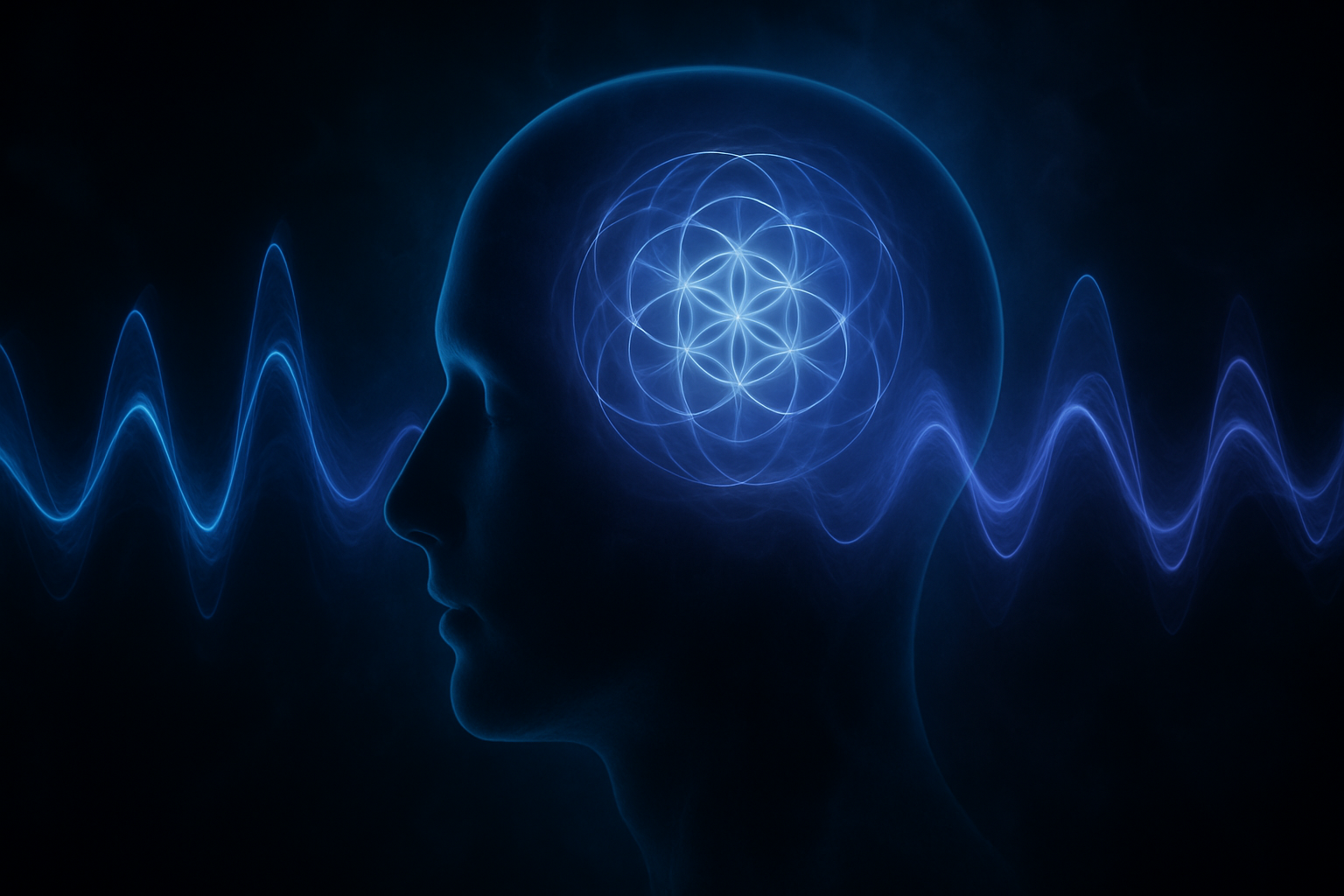
Gamma brainwaves operate at the highest measurable frequency in the human brain and are directly linked to peak cognitive performance, heightened perception, and unified conscious experience. Understanding how to access and sustain gamma states may be the missing piece in advanced meditation, manifestation, and mental mastery practices.
You have spent months — maybe years — meditating, journaling, and repeating affirmations, yet the mental clarity you were promised keeps slipping away by mid-morning. Focus fractures under a single notification. Sleep feels thin. And somewhere in the background is the quiet fear that every month spent operating below your cognitive ceiling is a month of compounding potential you cannot get back. The gamma brainwave state is the lever most practitioners never reach because nobody explained what it actually is or how to reliably enter it. This article does both, and gives you a working method before you finish your coffee. If you want to understand how peak coherence shapes conscious experience, the mechanism starts here.
What the Gamma Brainwave State Actually Is (and Why Most Explanations Miss the Point)
Brainwave frequencies are not categories that the brain switches between like channels on a radio. They are simultaneous oscillating electrical patterns produced by large populations of neurons firing in coordinated rhythms. The gamma brainwave state refers specifically to neural oscillations in the 30 to 100 Hz range, with the most studied band sitting around 40 Hz. At that frequency, thousands of neurons across distant cortical regions are synchronizing their firing within milliseconds of each other.
The reason this matters is a phenomenon neuroscientists call neural binding. When you perceive something — a face, a problem, an emotion — your brain does not process it in a single location. Visual data lands in the occipital cortex, emotional weight registers in the limbic system, language tagging happens in the temporal lobe. Gamma oscillations act as the synchronizing carrier wave that binds these separate processing streams into a single unified moment of awareness. Without sufficient gamma activity, perception becomes fragmented: you read the words but miss the meaning; you sit in meditation but feel nothing integrate.
This binding function is why the gamma brainwave state correlates so strongly with moments of insight, heightened sensory clarity, and what researchers describe as presence. It is also why the transition out of gamma, which happens reliably under chronic stress, sleep deprivation, or cognitively passive screen consumption, feels like a gradual dimming rather than a sudden switch.
For context on how gamma fits into the full spectrum, the high-alert cognition of beta states (13-30 Hz) operates just below gamma and handles focused analytical work, while gamma represents the integrative ceiling where that analysis becomes holistic understanding.
The Neuroscience Behind Gamma: What the Research Actually Shows
The scientific investigation of gamma oscillations accelerated significantly after the work of neuroscientist Wolf Singer and his colleagues at the Max Planck Institute in the 1980s and 1990s, whose experiments with visual cortex cells demonstrated that neurons responding to the same object synchronize at gamma frequencies. That synchrony, not just individual firing rate, was the signal of coherent perception.
The implications became profound when researchers began studying experienced meditators. A landmark 2004 study published in PNAS by Antoine Lutz, Richard Davidson, and colleagues at the University of Wisconsin examined Tibetan Buddhist monks with tens of thousands of hours of meditation practice. During compassion meditation, the monks produced sustained, high-amplitude gamma oscillations that were dramatically more powerful and more spatially coherent than those of novice meditators. The long-range synchrony between frontal and parietal regions was particularly striking, suggesting that years of practice had literally rewired the architecture of gamma coordination.
"What we found suggests that mental training can systematically change the way the brain works — not as a metaphor, but as a measurable alteration in neural dynamics." — Richard Davidson, neuroscientist, University of Wisconsin-Madison
At a more theoretical level, physicist Roger Penrose and anesthesiologist Stuart Hameroff proposed in their Orchestrated Objective Reduction (Orch-OR) model that quantum processes inside neuronal microtubules may couple with gamma-frequency neural oscillations to produce moments of conscious awareness. While this remains a hypothesis rather than settled science, it points toward why gamma is not merely correlated with sharp thinking but may be constitutive of conscious experience itself.
Separately, research from the HeartMath Institute, including work by Rollin McCraty, has shown that cardiac coherence and brainwave coherence are coupled. When heart rhythm variability enters a coherent pattern through focused positive emotion, gamma activity in the cortex increases. This provides a physiological bridge between emotional regulation practices and measurable neural performance, and it explains why purely cognitive approaches to focus often plateau without addressing autonomic tone.
For those interested in the auditory pathway into these states, the science of binaural beats and neural entrainment offers a validated mechanism: presenting slightly different frequencies to each ear causes the brain to produce a third frequency equal to their difference, which can be tuned to the gamma range to encourage endogenous oscillation at that band.
How to Enter the Gamma Brainwave State Without Years of Practice
The honest answer is that sustained, monk-level gamma coherence takes time to develop. But entry-level gamma access, sufficient to produce measurable improvements in attention binding and perceptual clarity, is achievable in a single session through two mechanisms: rhythmic auditory stimulation and deliberate attentional focus combined with coherent breathing.
Rhythmic auditory stimulation at 40 Hz has been validated in multiple studies, including recent Alzheimer's research at MIT (Li-Huei Tsai's lab), where 40 Hz flickering light and sound reduced amyloid burden in mouse models by driving gamma oscillation in the cortex and hippocampus. You do not need specialized equipment. A binaural beat track with a 40 Hz carrier differential, delivered through headphones, produces a similar entrainment signal.
The breathing component matters because slow, coherent breathing at roughly five to six breath cycles per minute shifts autonomic balance toward parasympathetic dominance, reduces cortisol, and opens the window in which gamma entrainment can actually take hold. Trying to force gamma while the nervous system is sympathetically activated is like trying to tune a radio while someone shakes the antenna.
It is worth understanding how gamma relates to the deeper restorative states. The subconscious access of theta states (4-8 Hz) is where old programs are loosened; gamma is where new integrated awareness is installed. Alternating or sequencing them is a more complete protocol than chasing gamma alone.
Common Mistakes That Block Gamma Access
The first and most frequent mistake is attempting gamma entrainment while fatigued. Sleep deprivation is one of the strongest suppressors of gamma amplitude. A 10-minute gamma session on four hours of sleep will produce minimal coherence because the substrate, a rested and adequately myelinated neural network, is not present. Prioritize one good sleep cycle over three tired gamma sessions.
The second mistake is passive listening without attentional anchor. Gamma oscillations are not just produced by sound; they are produced by the act of directed attention itself. Simply playing a 40 Hz binaural track while scrolling a phone is neurologically incoherent. The auditory stimulus needs to be paired with a focused mental task or a stable point of sensory attention to produce the synchrony that makes gamma useful.
The third mistake is skipping the relaxed alpha bridge that precedes deep gamma entry. Moving from anxious waking beta directly into gamma entrainment without a two-to-three minute alpha transition (slow breathing, eyes closed, reduced sensory input) is like sprinting before warming up. The transition state matters.
Try This in the Next 10 Minutes
- Find a quiet space and put on headphones. Locate a 40 Hz binaural beat track on any major audio platform. Tracks labeled "gamma binaural beats 40 Hz" with a carrier tone below 1000 Hz are suitable. Check that you will not be interrupted for 10 minutes.
- Begin coherent breathing for two minutes. Inhale for four counts, exhale for six counts. This ratio lengthens the exhale relative to the inhale, activating the vagal brake and shifting autonomic balance. Keep eyes closed and allow thought without chasing it.
- Select one focused attentional anchor. This can be the sensation of the binaural tone in your skull, a simple visual image held behind closed eyes, or a single question you genuinely want to resolve. Hold that anchor loosely, returning to it each time attention drifts.
- Sustain for six to eight minutes. Do not evaluate the experience during it. Gamma coherence builds cumulatively across the session. Interrupting it mentally to check whether it is working resets the entrainment window.
- Exit slowly. Spend one minute with eyes still closed and breathing returning to natural rhythm. Notice what sensory detail or mental clarity has shifted before opening your eyes.
For safe and effective session lengths, daily listening limits for binaural entrainment are worth reviewing before making this a regular practice.
Quantress encodes 40 Hz gamma carrier frequencies into archetype-specific resonance sessions, paired with coherence-optimized soundscapes and breath-pacing guides, so you do not have to assemble the auditory, attentional, and autonomic components by hand each time. The protocol above works immediately; the Quantress sessions are designed for those who want that protocol refined and repeatable across different cognitive and emotional objectives.
The version of you that wakes up thinking clearly, moves through complexity without fracturing, and ends the day having actually advanced on what matters most is not a personality trait some people are born with. It is a neural state. And now you know exactly where it lives in the frequency spectrum, what the science says about how to reach it, and what to do in the next ten minutes to find out for yourself.